Learning how to keep chickens warm in winter is mostly learning how to keep them dry and out of the wind. A healthy adult hen already wears a down jacket she never takes off; your job is to stop drafts, damp bedding and frozen water from undoing it. University poultry specialists agree on that. They part ways on one question: whether to add heat at all.
Below are 12 coop fixes in the order most flocks need them, plus a temperature table, a heat decision table and copy-ready checklists. All of it is about adult birds; chicks in a brooder need a heat source to survive (University of Maryland Extension), which is a separate job.
Quick answer: Keep adult chickens warm in winter by sealing drafts at roost height while leaving vents open up high, adding several inches of dry bedding, giving them wide wooden roosts, and keeping water unfrozen and feed topped up (hens can eat up to 25% more in cold weather). Most acclimated, cold-hardy hens in a dry coop need no added heat. If you do heat, use a secured radiant heater and treat heat lamps as a real fire risk.
In this guide
How Cold Can Chickens Tolerate?
There is no single number, because wind and moisture matter as much as the thermometer. A dry hen out of the wind copes with weather that would put frostbite on a damp one. That is why the same extension fact sheet can say adult birds rarely need heat and also warn about frozen combs.
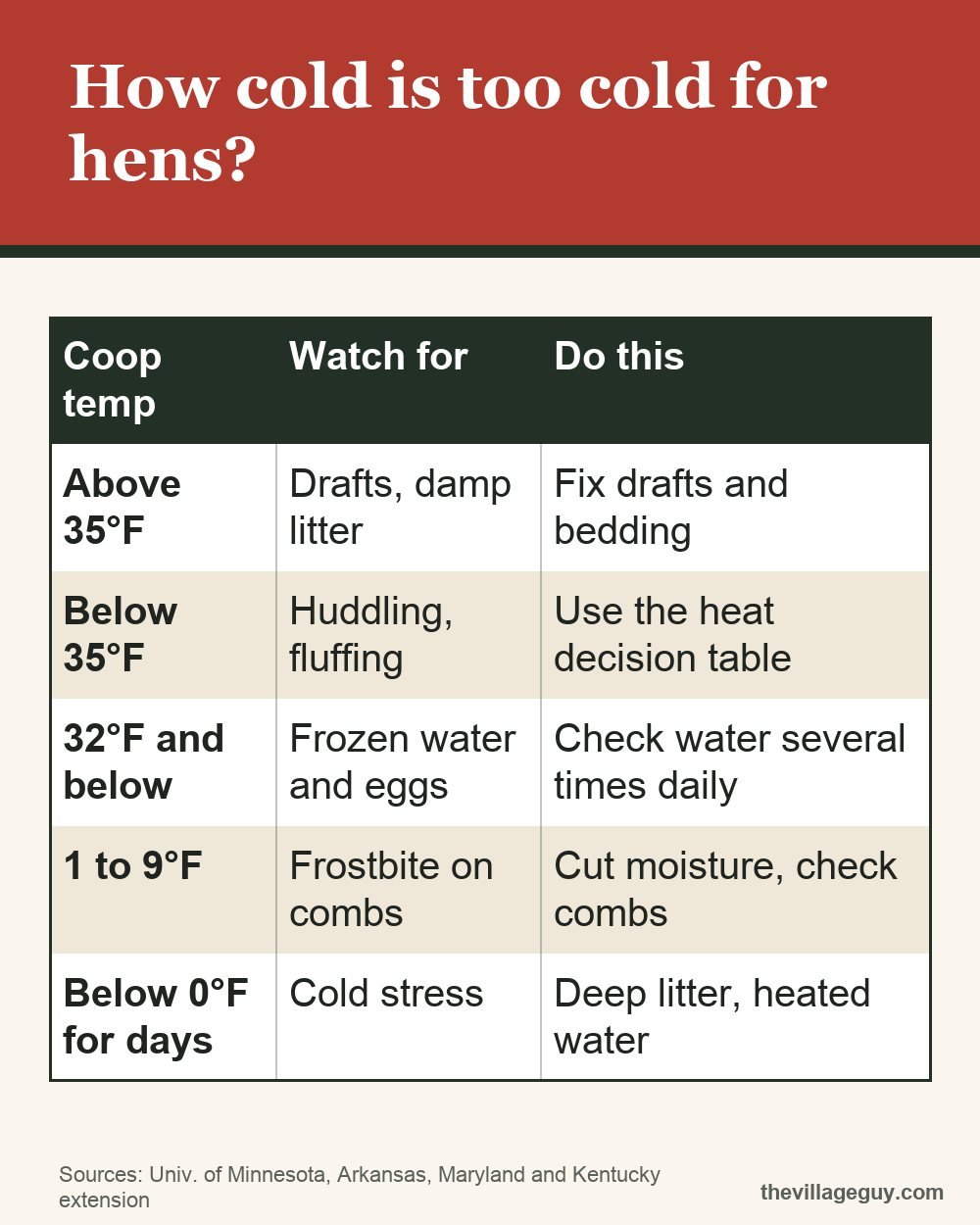
The table pulls together what several land-grant universities say at each temperature band. Treat it as a guide to what to watch, not a line where hens suddenly fail.
| Temperature (in the coop) | What extension sources say | What to do |
|---|---|---|
| Above 35°F (2°C) | Acclimated adult hens in a dry, draft-free coop manage well. | Concentrate on drafts, bedding and ventilation. |
| Below 35°F | Minnesota and Arkansas extension advise supplemental heat at this point. Maryland, Ohio State and New Hampshire say sheltered, acclimated adults usually do not need it. | Use the heat decision table in Fix 12. |
| 32°F (0°C) and below | Open water freezes, and birds cannot break through ice (Maryland). | Check water several times a day; collect eggs once or twice daily. |
| Single digits °F and below | Frostbite on combs, wattles and toes becomes a real problem, especially in damp coops (Kentucky). | Cut moisture; check large-combed hens and roosters at dusk. |
| Below 0°F (-18°C) for several days | Kentucky notes heat lamps can offset a multi-day sub-zero spell but are a fire hazard; flocks also do well on deep litter with heated water. | Favor deep litter and heated water; heat only with the safety steps below. |
Signs your hens are too cold
University of Minnesota and University of New Hampshire extension staff list the same cold-stress signals: birds huddling together, standing on one leg with the other foot pulled up into the feathers, and staying puffed up for long periods. One bird doing it on a frosty morning is normal; a whole flock doing it all day usually means a draft or wet bedding. Minnesota warns that prolonged cold stress can hurt performance and can be fatal.
Fixes 1 to 3: Stop Drafts, Keep the Air Moving
A draft blows across the birds and strips heat from their feathers. Ventilation passes above them and carries out the moisture they breathe and drop. You want much less of the first and a steady supply of the second.
Fix 1: Seal drafts at bird level
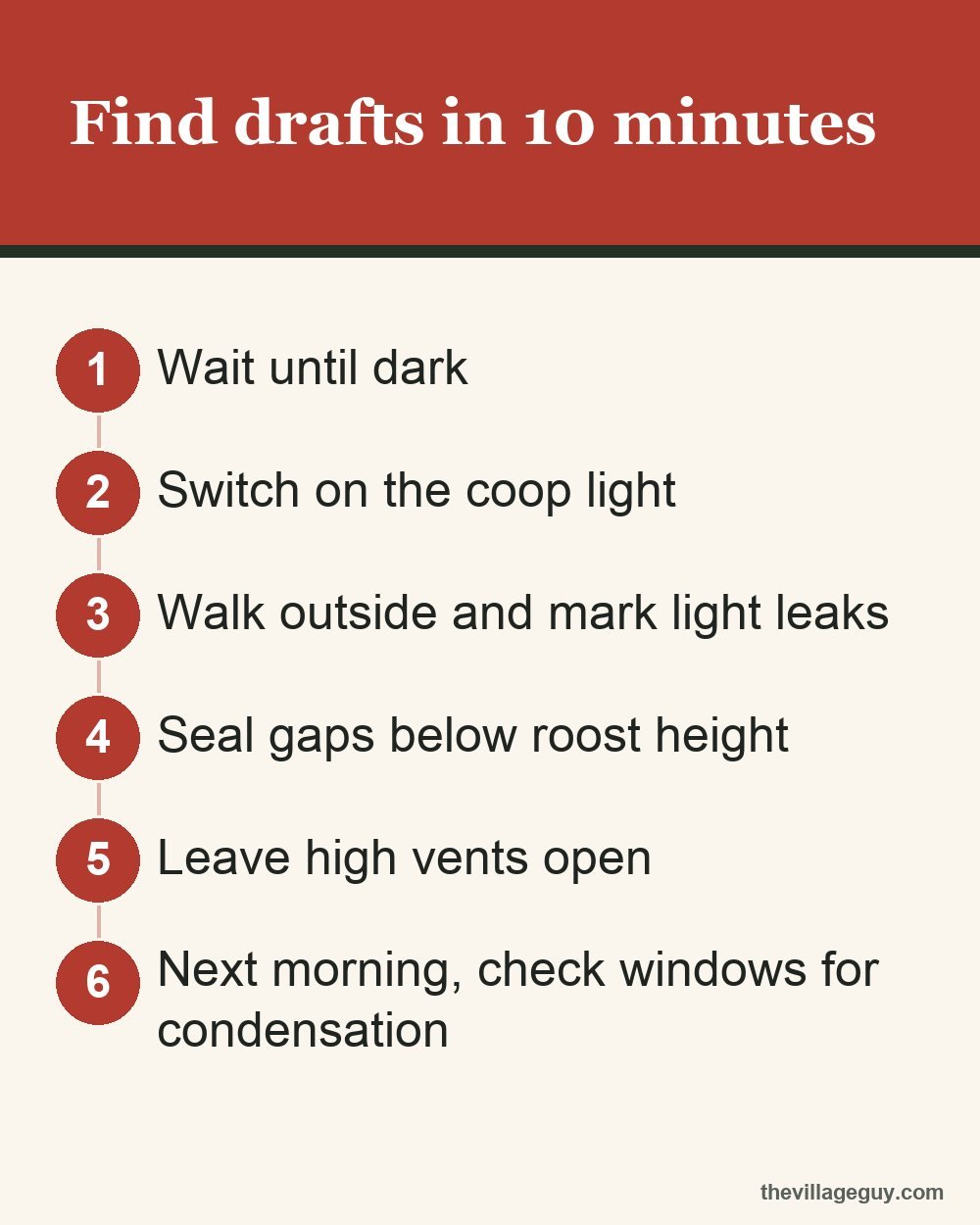
Ohio State University Extension suggests an easy test: turn on the coop light after dark and walk around the outside. Every place light leaks out is a place wind can get in. Patch the gaps below and around roost height, ideally before hard frost. Keep spray foam and caulk where hens cannot peck it, because they will. Illinois Extension sets the standard simply: in winter you should never see air moving a chicken’s feathers inside the coop.
Fix 2: Leave vents open up high
Ohio State’s advice is to block drafts but not eliminate ventilation. Ammonia from droppings builds up in a closed coop and can cause respiratory disease, and humid air raises frostbite risk more than dry air does. University of Arkansas specialists suggest roof vents or a partly opened window, with burlap over the opening to slow the airflow without sealing it. Put vents above the roosts and away from the prevailing wind, and cover them with sturdy wire mesh so predators cannot use them as a door.
Fix 3: Run the condensation check
The University of Kentucky’s poultry extension team offers a free moisture meter: your windows. Condensation on glass or uninsulated walls in the morning means you need more ventilation, not less. Physics helps: Utah State University Extension notes that air’s capacity to hold water doubles with every 18°F (10°C) rise, so warm air leaving through a high vent carries a lot of moisture with it.
Fixes 4 to 6: Bedding, Roosts and a Sheltered Run
Fix 4: Lay deep, dry bedding
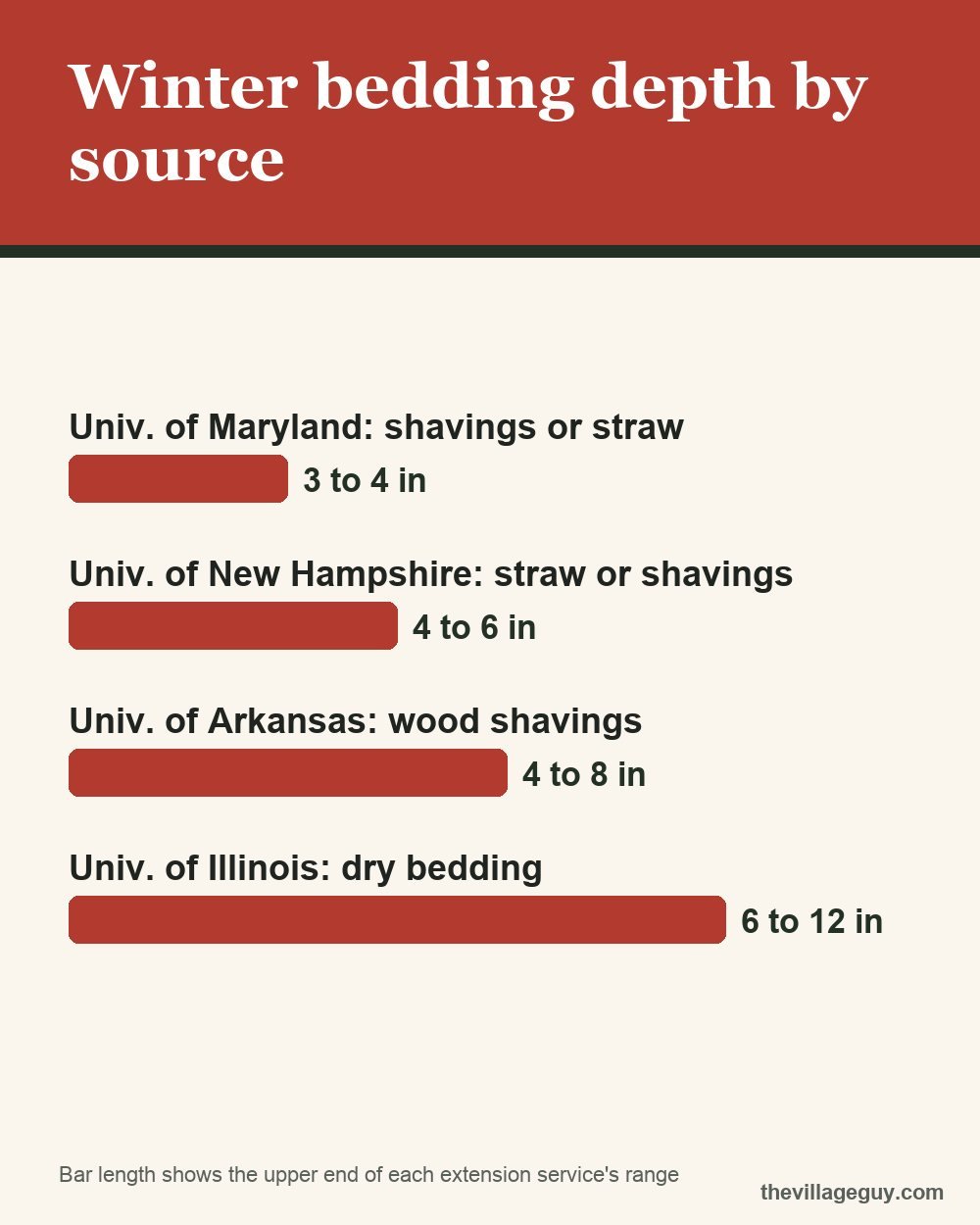
Bedding insulates feet from a frozen floor, and deep litter even generates a little heat as microbes break it down, according to the University of Maryland. Recommended depths vary by source, from 3 to 4 inches of pine shavings or straw (Maryland) up to a 6 to 12 inch layer of dry bedding (Illinois). Ohio State suggests a clean coop before the big winter layer goes in, then daily moisture checks and regular fluffing, since deep bedding can raise humidity. Kentucky’s specialists prefer postponing the full clean-out until spring and top-dressing with fresh, dry material.
Fix 5: Give them wide, wooden roosts
Metal and plastic pipe roosts conduct cold straight into the feet and can contribute to frostbite. Maryland recommends wood, ideally a 2×4 with the wide side up, so a sitting hen can cover her toes with her belly feathers. Make sure every bird can roost off the floor. Ohio State suggests at least 6 to 8 inches of roost per chicken; New Hampshire suggests 9 to 12 inches.
Fix 6: Turn the run into a windbreak
Heavy plastic or a tarp on the windward sides of a fenced run keeps snow and wind off the birds. Ohio State’s caution is to stop short of the roofline so air can still move. Clear snow from the part of the run they use, or scatter straw over it, since many hens refuse to walk on snow. If you are siting a new coop, Maryland suggests facing it so daytime sun can enter and warm it.
Fixes 7 to 9: Unfrozen Water and More Feed
Fix 7: Keep water liquid around the clock
Illinois Extension says chickens need access to water at least every 10 hours, day and night, and a frozen waterer counts as no water. Your options:
- A heated base under a metal fount, or an all-in-one heated waterer (both need a safe power supply).
- A low-walled rubber bucket that you can flip to pop the ice out and refill, which New Hampshire suggests for coops without power.
- Two waterers on rotation, one in the coop and one thawing indoors.
Ohio State recommends changing water twice a day, checking it in the evening so it lasts the night, and fixing leaks that add humidity. It also warns that heated bowls can malfunction and start a fire, so inspect cords and keep them off the floor and out of pecking reach.
Fix 8: Top up the feeder
Arkansas and New Hampshire extension specialists say birds can eat up to 25% more feed in cold weather, so keep feeders full and feed available at all times. Ohio State puts a typical laying hen at about 2 pounds of feed per week on a layer ration with 14 to 17 percent crude protein. Treats are fine, but Maryland suggests limiting suet cakes to 10% of total feed intake so the hens still eat their balanced ration.
Fix 9: Add late-day scratch and grit
A small handful of scratch grains late in the afternoon is a classic winter move that Ohio State and New Hampshire both endorse: digesting it helps birds produce body heat overnight. Put out grit as well, because hens cannot find pebbles when the ground is frozen or buried in straw.
Fixes 10 and 11: Frostbite on Chicken Comb, Wattles and Toes
Frostbite happens when fluid in the tissue freezes and cells die. Kentucky’s poultry specialists say it is most likely at night in a cold, poorly ventilated coop with damp bedding, so Fixes 1 to 4 do most of the prevention.
Fix 10: Protect the birds most at risk
Roosters get frostbite most often because their combs and wattles are bigger, and any hen with a large single comb, such as a Leghorn, is also at risk. Small combs like pea and strawberry types see far less of it. If you are choosing birds for a cold region, Ohio State names Ameraucanas, Plymouth Rocks, Rhode Island Reds and Wyandottes among the breeds that winter well. Maryland and Illinois suggest a coat of petroleum jelly on large combs and wattles on the coldest nights; Kentucky adds that it helps with mild freezing but that coop management is the real key.
Fix 11: Check combs at dusk and know the first-aid limits
Frostbitten tissue looks pale or off-color at first, then gray or black at the comb tips, wattle edges or toes, and it feels brittle. Kentucky notes that dead tissue eventually dries and falls off and does not regrow, and that healing can take four to six weeks. Arkansas’s extension poultry veterinarian advises consulting your vet if you see frostbite. While you wait, the card below sums up what helps and what harms.
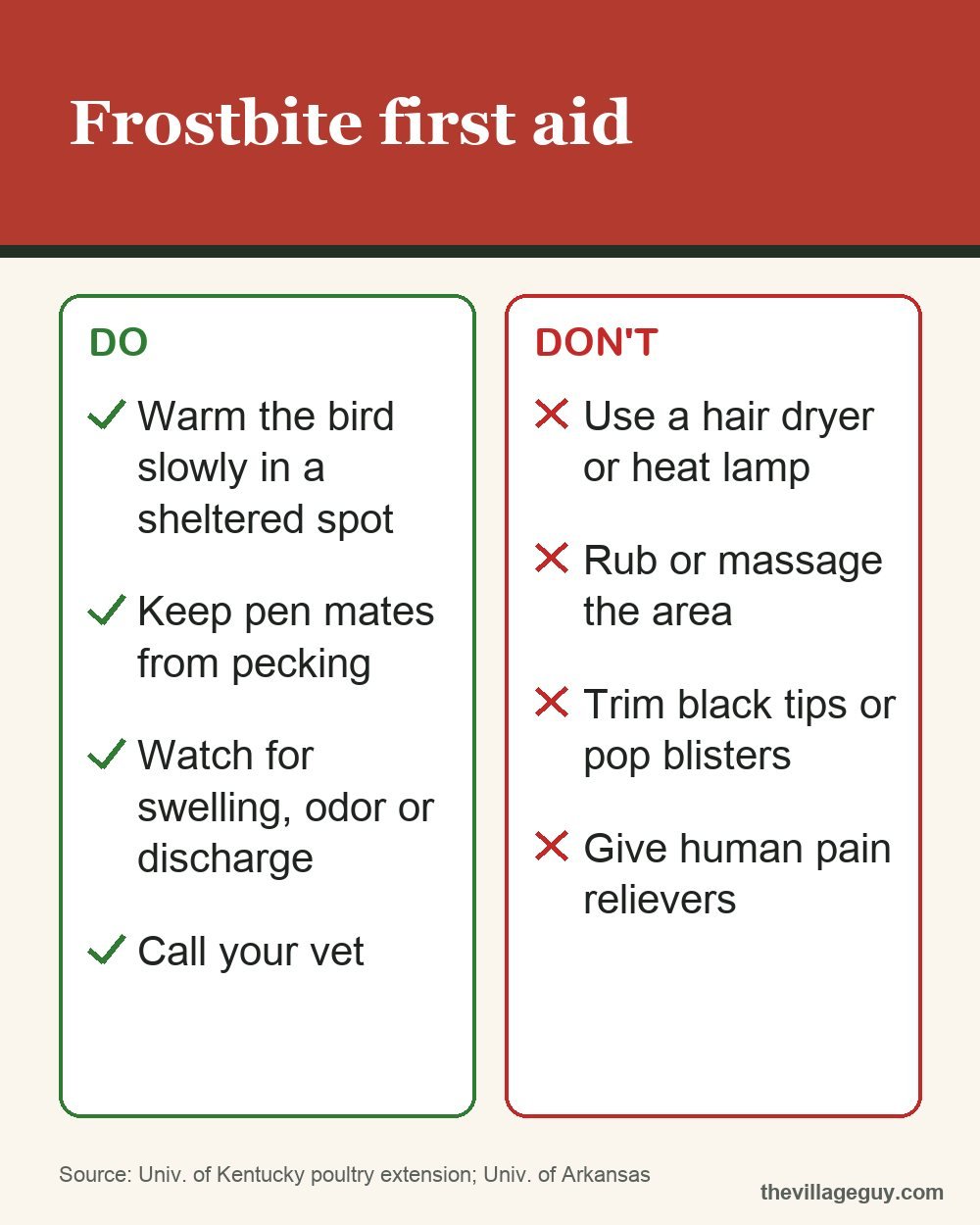
Safety: Never give a chicken human pain relievers. Kentucky’s poultry specialists note that some are lethal to chickens. Do not warm frostbite with a hair dryer or heat lamp, do not rub it, and do not trim blackened tissue unless a vet tells you to. Ask a veterinarian about any treatment or medication, and watch for swelling, redness, discharge or a bad smell, which can mean infection.
Fix 12: Do Chickens Need Heat in Winter? Choosing a Chicken Coop Heater
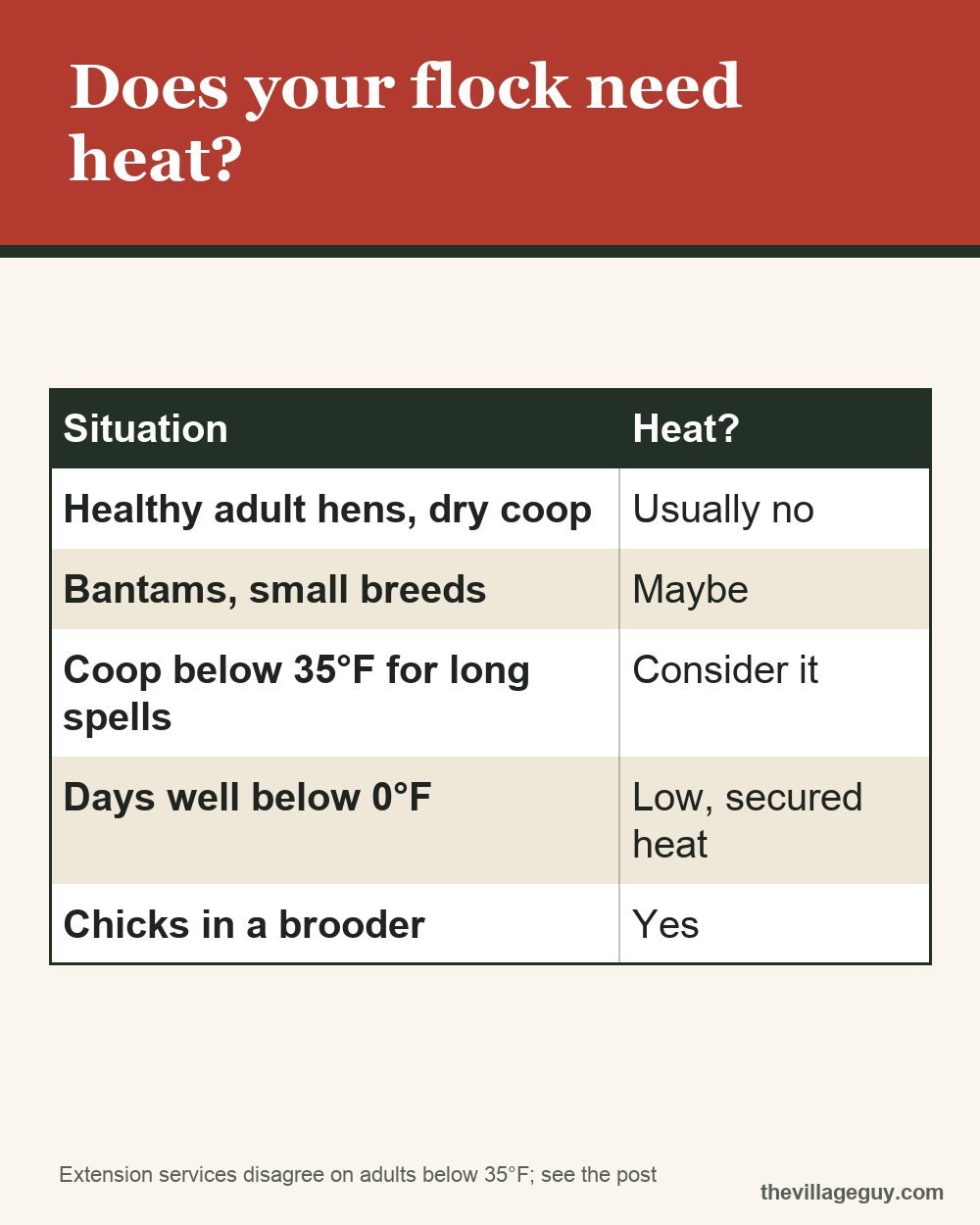
Here extension services genuinely disagree. Minnesota and Arkansas recommend supplemental heat once the coop drops below 35°F. Maryland, Ohio State, New Hampshire and Kentucky say adults protected from wind and wet usually do not need it, and Ohio State advises letting birds acclimate naturally as autumn cools. Find your flock in the table.
| Your situation | Add heat? | Why |
|---|---|---|
| Healthy, standard-size hens in a dry, draft-free coop | Usually no | Acclimated, cold-tolerant birds in a dry, ventilated coop rarely need it (Ohio State, Maryland). |
| Bantams and other small breeds | Maybe | New Hampshire says they may need insulation or a purpose-built coop heater with safety features. |
| Coop stays below 35°F for long stretches | Consider it | The Minnesota and Arkansas threshold for supplemental heat. |
| Several days well below 0°F | Consider low, secured heat | Kentucky notes heat can offset extreme multi-day cold, with fire risk. |
| Sick or injured bird | Ask your vet | A sick bird may need a separate, sheltered pen; let a vet guide care. |
| Chicks in the brooder | Yes | Young birds need a heat source to survive and grow (Maryland). |
If you do heat, heat the right spot
Arkansas’s specialists suggest placing heat at nest-box height or the lowest roost rung, using radiant options such as brooder plates or hanging panel heaters, or an approved heat lamp with a heat bulb, and adding a thermometer or thermostat so you know what the coop is doing. Ohio State warns that space heaters, radiant heaters and heat lamps can cause excess heat, carbon dioxide buildup or fire.
Safety: Heat lamps are a known cause of coop fires, and Kentucky’s poultry specialists note that coops and attached homes are lost to them every year. If you use any heater, follow the manufacturer’s instructions and these steps from NDSU Extension and National Fire Protection Association tips shared by Clark County, Washington: hang lamps from a chain or other non-flammable hanger (a spring clamp alone is not enough), keep every heat source away from bedding and anything that can burn, plug directly into a GFCI-protected outlet rather than an extension cord, inspect sockets and cords before use, clean off dust and cobwebs, and never splash cold water on a hot bulb, which can shatter it. Choose equipment built for agricultural use, have an electrician wire the coop, and keep an ABC-rated fire extinguisher near the door.
How to Keep Chickens Warm in Winter: Copy-Ready Checklists
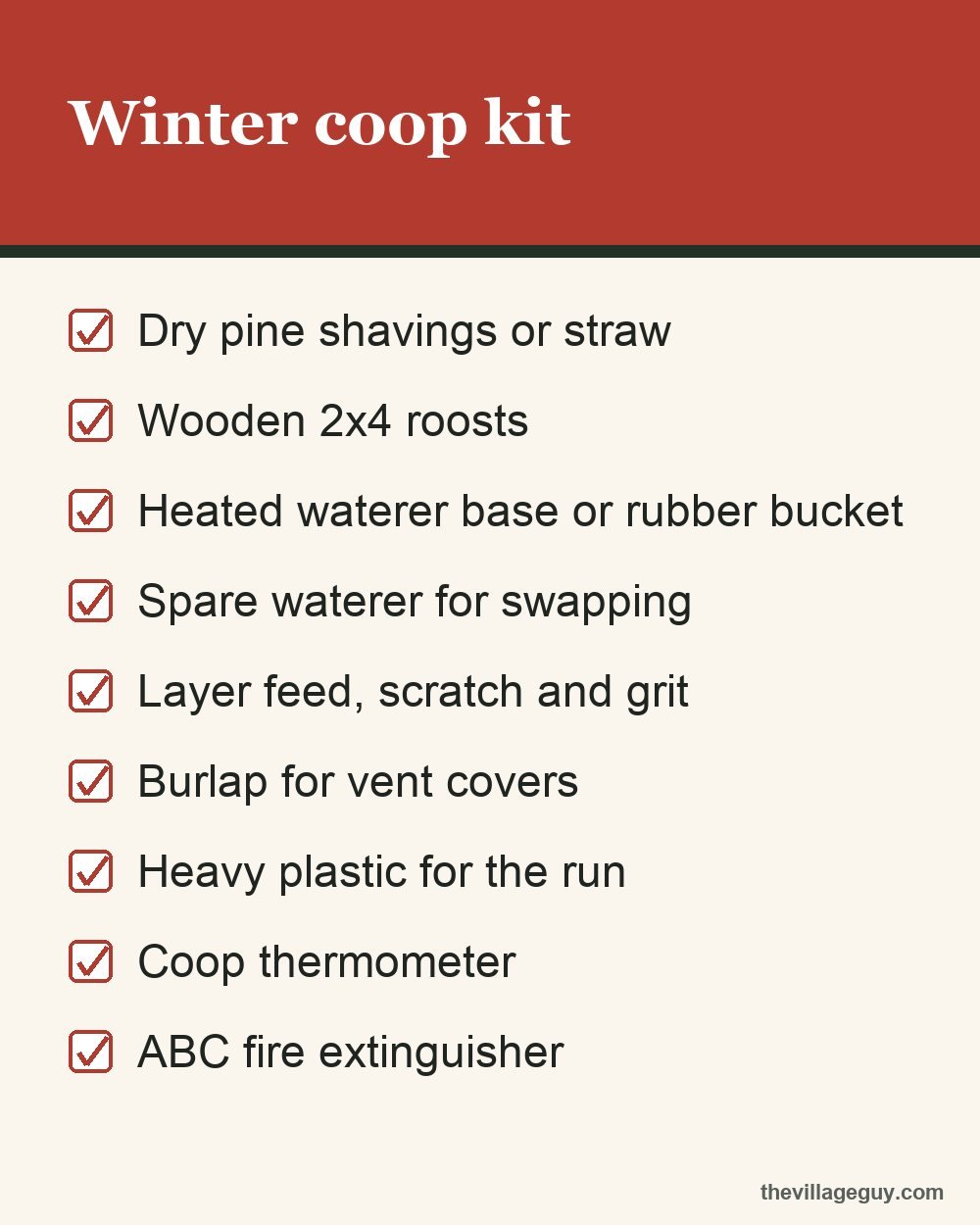
These lists follow the fixes above in the order you will use them: once in autumn, every day in cold weather, and on the handful of nights each winter that are truly brutal. If you only want to know how to winterize a chicken coop in one afternoon, the first list is the one to print.
Before the first hard freeze
- Walk around the lit coop after dark and mark every gap that leaks light.
- Patch gaps below roost height with material the hens cannot reach or peck.
- Confirm a vent or partly open window above the roosts, screened against predators.
- Fix roof leaks so rain and snowmelt cannot soak the bedding.
- Swap round metal or plastic roosts for wooden 2x4s, wide side up.
- Clean out old litter and lay a fresh, dry layer at least 3 to 4 inches deep.
- Test the heated waterer base and inspect its cord for chew marks or cracks.
- Wrap the windward sides of the run in heavy plastic, stopping short of the roof.
- Stock up on layer feed, scratch, grit and bedding before roads get icy.
Every cold day
- Check waterers morning, midday and evening for ice.
- Top up the feeder so feed is available at all times.
- Scatter a small handful of scratch late in the afternoon.
- Collect eggs once or twice a day before they freeze and crack.
- Look for condensation on windows and damp patches in the bedding.
- Count heads at dusk and glance at combs and toes for color changes.
When a cold snap is forecast
- Add a few inches of dry bedding on top of the existing layer.
- Close the pop door at night but leave the high vents open.
- Coat large single combs and wattles with petroleum jelly if you choose to.
- Recheck that any heater or lamp is chained, guarded and clear of bedding.
For more seasonal jobs, browse the village and country life guides, or read how The Village Guy checks its facts.
Winter Chicken Care FAQ
Can chickens go outside in the snow?
Yes, healthy adult hens can spend winter days in the run if they have a dry, draft-free coop to return to. Shut them in during driving wind or freezing rain, when soaked feathers lose much of their insulating value.
How do I keep chicken water from freezing without electricity?
Use a black or dark rubber bucket you can flip to knock the ice out, refill it with fresh water morning and evening, and keep a second waterer thawing indoors to swap in. A sunny, sheltered corner buys extra time on bright days, but check often: birds cannot break through ice on their own.
Should I close the coop up tight on the coldest nights?
Close and latch the doors against predators, but keep the high vents open. A sealed coop traps the moisture hens exhale, and Ohio State notes that humid air raises frostbite risk more than dry air. If the vent feels too open, hang burlap over it rather than blocking it.
Does a light in the coop keep chickens warm?
A light is for egg production, not warmth. Kentucky’s specialists note that a heat lamp can upset a lighting schedule and reduce laying, and New Hampshire recommends LED bulbs because incandescent and fluorescent bulbs run hotter and are a fire hazard.
Sources
- University of Maryland Extension: Winter Weather and Small Flocks: What You Need to Know (FS-1133) (heat for chicks not adults, 2×4 roosts, bedding depth, water checks, suet limit)
- Ohio State University Extension: Winter and Your Backyard Chickens (ANR-66) (draft test, ventilation, cold-hardy breeds, feed, water, roost space)
- University of New Hampshire Extension: How Should I Take Care of Backyard Chickens in the Winter? (25% more feed, grit, rubber buckets, bantams, LED bulbs)
- Poultry Extension (University of Kentucky): Frostbite in Chickens (frostbite risk and first aid, condensation check, heat lamp fires)
- University of Arkansas Cooperative Extension: Backyard poultry coops prepped for cold still require good ventilation (35°F heat threshold, heater placement, burlap vents)
- University of Illinois Extension: How to care for backyard chickens in winter (drafts, bedding depth, water every 10 hours)
- University of Minnesota Extension: Caring for chickens in cold weather (35°F heat guidance, cold-stress signs, wiring)
- NDSU Extension: Take precautions when using heat lamps for newborn livestock (heat lamp hanging, outlets, extinguisher)
- Clark County, Washington: Safety tips to prevent a chicken coop fire (NFPA coop fire tips)
- Utah State University Extension: Housing Backyard Chickens (air moisture capacity and winter airflow)