A wood stove rewards a simple rhythm: dry wood, a hot start, enough air to keep flames alive, and a clean chimney. Learning how to use a wood stove well is mostly learning that rhythm, plus a handful of safety habits that keep fire and carbon monoxide where they belong.
This is the beginner’s overview for the whole wood heat topic on this site. It walks through the first fire, daily burning, clean glass, ash handling, chimney care and safety, and it points to the deeper guides on buying, seasoning and choosing firewood rather than repeating them. Your stove’s manual is still the final word, because air controls, loading limits and maintenance differ from model to model.
Quick answer: Burn only dry, seasoned wood below 20 percent moisture. Light a small, hot fire with kindling and natural fire starters, leave the door cracked or the air wide open until it is burning vigorously, then add larger splits and turn the air down gradually without letting the fire smolder. Remove ashes into a lidded metal can kept outdoors, have the chimney inspected every year, and keep carbon monoxide alarms on every level of the home.
In this guide
- How to use a wood stove: the daily rhythm
- Before your first fire
- Fuel: what goes in the firebox
- How to start a fire in a wood stove
- Running it hot and clean
- How to clean wood stove glass
- Ashes: removal, storage and reuse
- Chimney care and creosote
- Wood stove safety: fire and carbon monoxide
- Troubleshooting common problems
- Wood stove FAQ
How to use a wood stove: the daily rhythm
Every burn follows the same cycle, whether you light the stove once a season or keep it going from November to April. Understanding the cycle makes the individual steps make sense.
| Stage | What you do | What you are aiming for |
|---|---|---|
| Kindling | Small dry kindling, natural starter, air wide open | Fast flames that warm the flue so it drafts |
| Establishing | Add small, then medium splits with space between them | A bright, active fire and a growing bed of coals |
| Cruising | Turn the air down in steps once the load is fully burning | Steady flames, little or no visible smoke outside |
| Coaling | Leave the coals to burn down | A hot coal bed for an easy reload or restart |
| Reloading | Rake coals forward, open the door slowly, load, open the air until the new wood catches | The new load burning briskly before you turn down again |
The one stage to avoid is the smolder: a stove loaded full and choked down early so it barely glows. The Chimney Safety Institute of America (CSIA) lists restricted air supply, unseasoned wood and cooler-than-normal chimney temperatures as the conditions that speed creosote buildup. A smoldering stove supplies all three at once.
Before your first fire
A safe stove starts before the match. EPA’s Burn Wise guidance (an archived program since 2025, but still the clearest federal advice on residential wood heat) says installation errors by non-professionals may not be visible, and that a professional should check clearances to combustibles, floor protection, and the size, height and configuration of the chimney or vent. Your local building department may require a permit and inspection, so ask before the stove goes in.
Older stoves cost more to run. EPA says certified stoves can be up to 50 percent more energy efficient and use about one third less wood for the same heat than older models, and that stoves made before 1990 burn wood less efficiently. EPA’s flowchart page on how to tell whether a stove is EPA-certified can help if you have inherited one with no paperwork.
- Read the stove manual end to end, including loading limits and air control settings.
- Confirm the installation meets the manufacturer’s clearances and your local code, ideally with a professional inspection.
- Check that the floor protection extends as far as the manual specifies.
- Install carbon monoxide alarms on every level of the home and outside sleeping areas.
- Test the smoke alarms and replace any dead batteries.
- Have the chimney inspected and swept if it has not been checked within the past year.
- Buy a lidded metal ash can, a stove thermometer if the manual recommends one, and a fire extinguisher for the room.
- Run any break-in or curing fires the manual calls for on a new stove before the first full burn.
Fuel: what goes in the firebox
Wood quality decides most of what happens next. EPA’s best practices say wood burns best below 20 percent moisture and should be seasoned at least six months. The other three guides in this series cover fuel in depth, so here is the short version with links:
- Buying: a legal cord is 128 cubic feet stacked, and face cords vary with piece length. See how much a cord of wood is and how many you need.
- Drying: split early, stack on rails, cover the top and test with a meter. See how to season firewood, with real drying times.
- Choosing species: dense hardwoods carry the most heat per cord; dry softwoods make excellent kindling. See the best firewood to burn, ranked by heat.
EPA also lists what never goes in a stove: household trash, cardboard, plastics, colored print, coated, painted or pressure-treated wood, plywood, particle board, ocean driftwood, and wet, rotted or moldy wood. EPA’s FAQ adds that wax-and-sawdust fire logs are made for open fireplaces, not wood stoves or inserts; if you use manufactured logs in a stove, check that your manual allows them.
How to start a fire in a wood stove
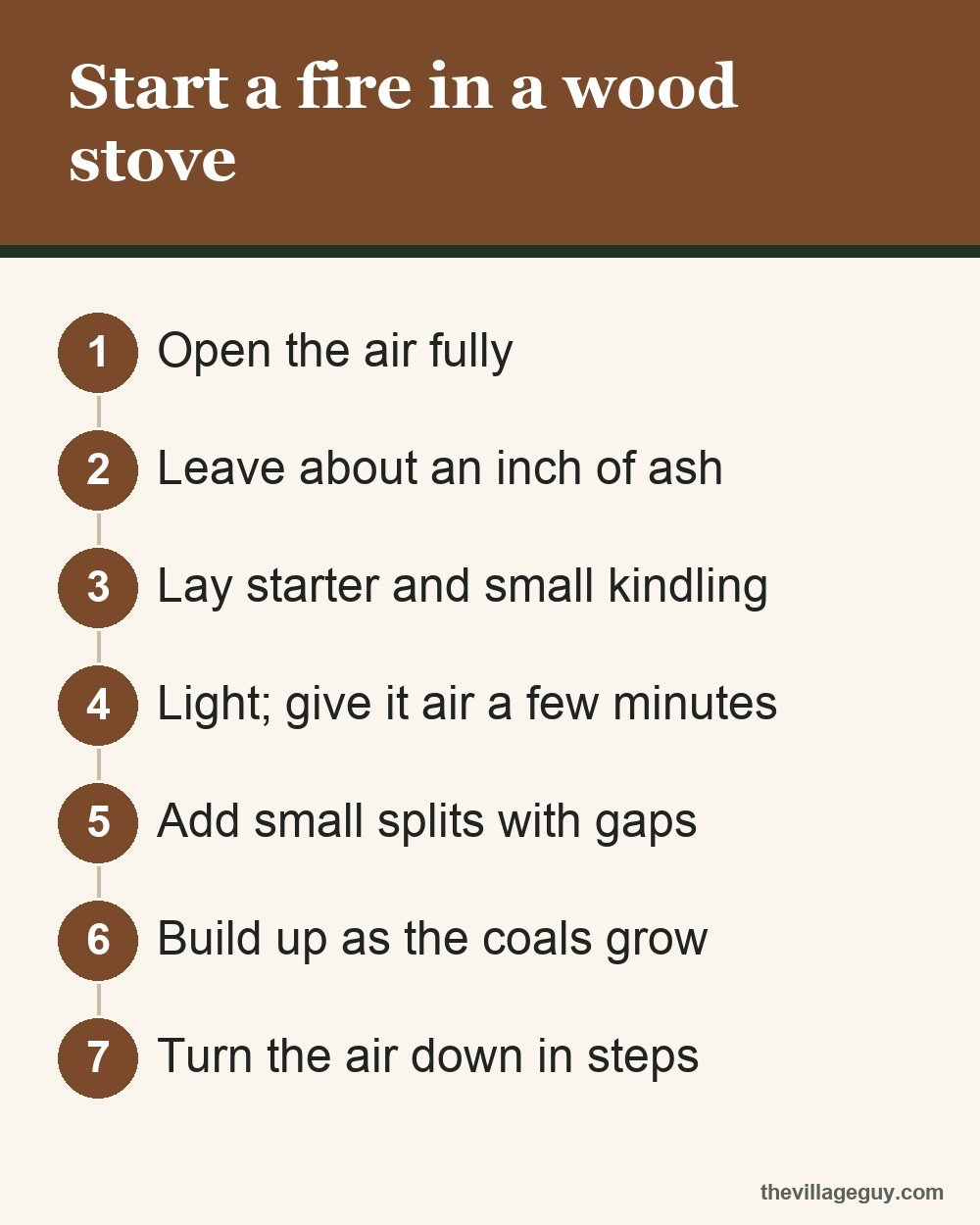
A good start matters because a cold chimney drafts poorly, and a poorly drafting chimney pushes smoke into the room. The aim is a small, hot fire that warms the flue quickly, then a gradual build. These seven steps follow EPA’s burn tips and its clean-burning checklist; adjust for your stove’s manual.
- Open the air. Set the air control (and bypass or damper, if your stove has one) fully open, as the manual directs for startup.
- Leave a thin ash bed. EPA suggests leaving about an inch of ash in the firebox to help keep coals insulated.
- Build small. Lay newspaper or an all-natural fire starter, then a loose crisscross of small, dry kindling. EPA notes some natural starters burn up to 15 minutes, which also warms the flue.
- Light and give it air. EPA’s tips suggest keeping the door open a few minutes so the fire gets plenty of air; never leave the stove unattended with the door open, and close it once the kindling is roaring.
- Add small splits. Once the kindling is burning well, add a few small pieces of firewood with space between them so air can flow.
- Build to full size. Add larger splits as the coal bed grows, keeping gaps between pieces; EPA’s checklist says to get the fire burning vigorously and heat the chimney before adding more wood.
- Turn down in steps. Once the load is fully involved, reduce the air gradually, keeping steady, active flames rather than a lazy smolder.
Some people prefer a top-down build: larger splits on the bottom, smaller pieces above, and kindling and starter on top, so the fire burns downward. Either layout works if the wood is dry and the fire gets enough air early; follow your manual if it recommends one. EPA warns never to start a fire with gasoline, kerosene or charcoal starter.
Running it hot and clean
A clean-burning stove makes almost no visible smoke once it is up to temperature. EPA’s simplest test costs nothing: go outside and look at the chimney. If you see smoke rather than clear heat shimmer or white steam, the fire usually needs more air or the wood is too wet.
Reloading without a smoke puff
EPA’s tips: open the door slowly when reloading so smoke does not spill into the room, rake some coals out from directly under where the new wood will go, make a valley of coals and lay the splits across it, and leave space between pieces. Then open the air until the new load is burning briskly before turning it down again.
Catalytic and non-catalytic stoves
Modern certified stoves come in two main designs, and they like slightly different handling. Check your manual to see which you have.
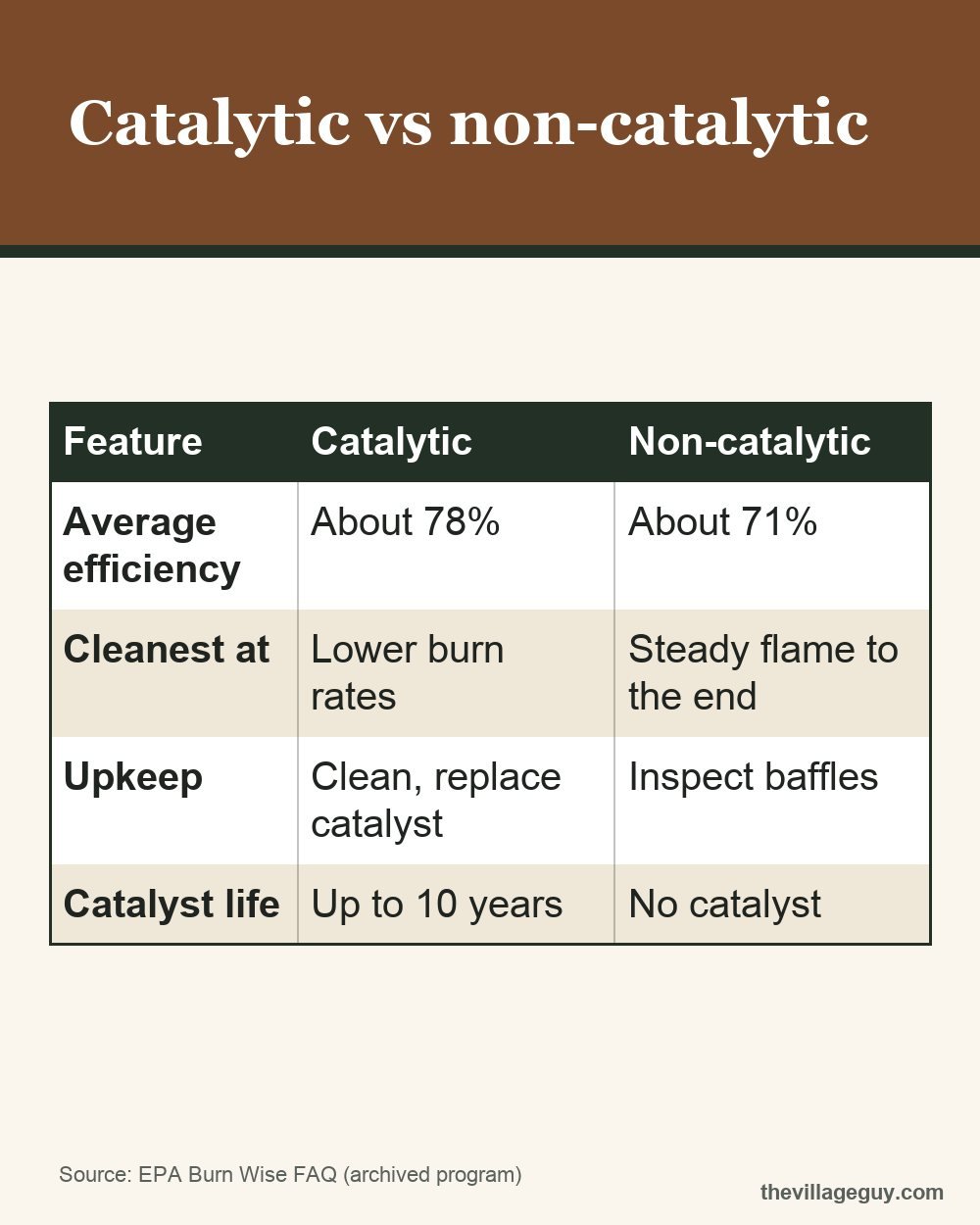
| Feature | Catalytic stove | Non-catalytic stove |
|---|---|---|
| How it cleans smoke | A catalytic combustor, which EPA compares to a car’s catalytic converter | Secondary air and baffles that burn gases in the firebox |
| Average efficiency (EPA FAQ) | About 78 percent (range 63 to 84) | About 71 percent |
| Best burn rate | Burns more cleanly at lower burn rates | Needs enough air to keep a steady flame until the tail end of the fire |
| Upkeep | Catalyst needs periodic cleaning and eventual replacement; EPA says modern catalysts can last up to 10 years with proper care | No catalyst to maintain; baffles and air tubes need inspection |
| Startup | Bypass open until the stove is hot, then engage the catalyst as the manual directs | Air open until the load is burning well, then reduce in steps |
One catalytic stove maker, Woodstock Soapstone, lists the warning signs of a worn-out combustor: noticeably less heat, more soot or creosote in the pipe, and brownish smoke instead of clear heat waves or white vapor. It recommends letting the stove cool, cleaning the combustor and its screen, and trying again before replacing anything.
Overnight burns
For a long burn, load dense, dry hardwood onto a hot coal bed, let the new load catch fully with the air open, then turn it down to the lowest setting your manual allows. CSIA warns that closing the air too soon or too much is one of the main causes of creosote buildup, so the turn-down comes after the wood is burning, never before. EPA’s FAQ also cautions that overloading the firebox can damage it and create a safety risk; respect the load line in your manual.
Your daily and weekly routine:
- Check the chimney from outside after each startup and reload; adjust air if you see smoke.
- Keep the stove door closed except when loading or tending.
- Bring in only a day or two of wood and keep it the distance from the stove your manual specifies.
- Keep a hot coal bed with a thin layer of ash for easy restarts.
- Glance at the stovepipe and connector for discoloration, rattling or smoke leaks.
- Check the door gasket by closing it on a strip of paper; if the paper slides out easily at any spot, the gasket may need replacing.
- Empty ashes into the metal can before they reach the bottom of the door opening or crowd the grate.
How to clean wood stove glass
Dirty glass is a message before it is a chore. EPA’s clean-burning checklist says a smoldering fire, “dirty” glass doors or smoke from the chimney are all signs the fire needs more air or the wood is too wet. Fix the cause and the glass stays clearer for longer; clean it without fixing the cause and it will be black again by the weekend.
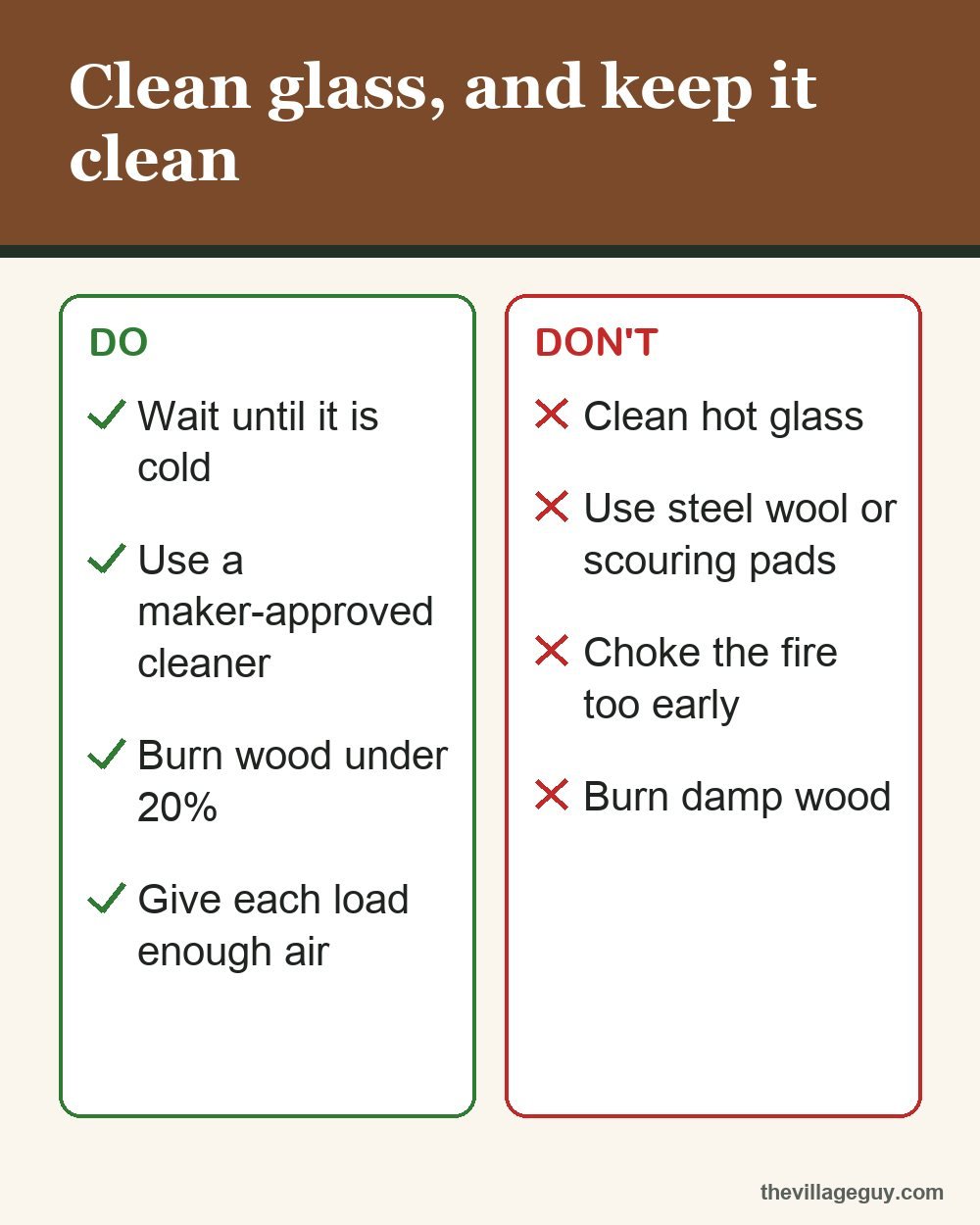
When you do clean it, follow your manufacturer’s instructions, since some glass and door designs have specific requirements.
- Wait until the stove and glass are completely cold.
- Lay a towel on the hearth to catch drips and ash.
- Wipe off loose soot with a dry paper towel first.
- Use a cleaner your stove manufacturer approves, applied to a cloth rather than sprayed toward the gasket.
- Skip steel wool and abrasive scouring pads, which can scratch the glass.
- Dry the glass and check the door gasket before relighting.
If the glass darkens mainly after long, turned-down overnight burns, that fits EPA’s point about too little air. Heavy staining after ordinary daytime burns points back to wet wood, a stove choked down too far, or both.
Ashes: removal, storage and reuse
Ashes can hide live coals for a surprisingly long time, which is why ash handling sits on every fire-safety list. EPA says to remove ashes regularly into a covered metal container and store it outdoors on a nonflammable surface. Illinois Extension adds that the container should not sit next to or on top of anything combustible.
- Use a metal shovel and a metal can with a tight lid, never a cardboard box, paper bag or plastic bucket.
- Set the can on bare ground, gravel or pavers, away from the house, decks, woodpiles and garages.
- Leave the ashes in the closed can until they are completely cold before spreading or bagging them.
- Leave about an inch of ash in the firebox, as EPA suggests, to insulate the coal bed.
Cold wood ash can go on the garden in modest amounts: Illinois Extension suggests usually not more than 15 pounds per 1,000 square feet. A soil test, or a call to your county extension office, will tell you whether your ground benefits from it.
Chimney care and creosote
Creosote is the tar-like residue that forms when smoke cools as it rises and condenses on the inside of the chimney, and it is flammable. CSIA puts it bluntly: clean chimneys don’t catch fire. The national standard for chimneys, NFPA 211, calls for chimneys, fireplaces and vents to be inspected at least once a year, and EPA’s FAQ says EPA and fire officials recommend having the stove, chimney and vents professionally inspected and cleaned each year.
How often a chimney needs sweeping depends on how much you burn and how well. CSIA recommends sweeping masonry fireplaces at 1/8 inch of sooty buildup, and factory-built fireplaces when any appreciable buildup occurs. A heavily used stove burning damp wood can reach that point long before the annual visit, so look up the flue (with a flashlight, stove cold) or have your sweep check mid-season.
Signs of a chimney fire
CSIA says most chimney fires go undetected, but the dramatic ones announce themselves. Know these warning signs and act fast:
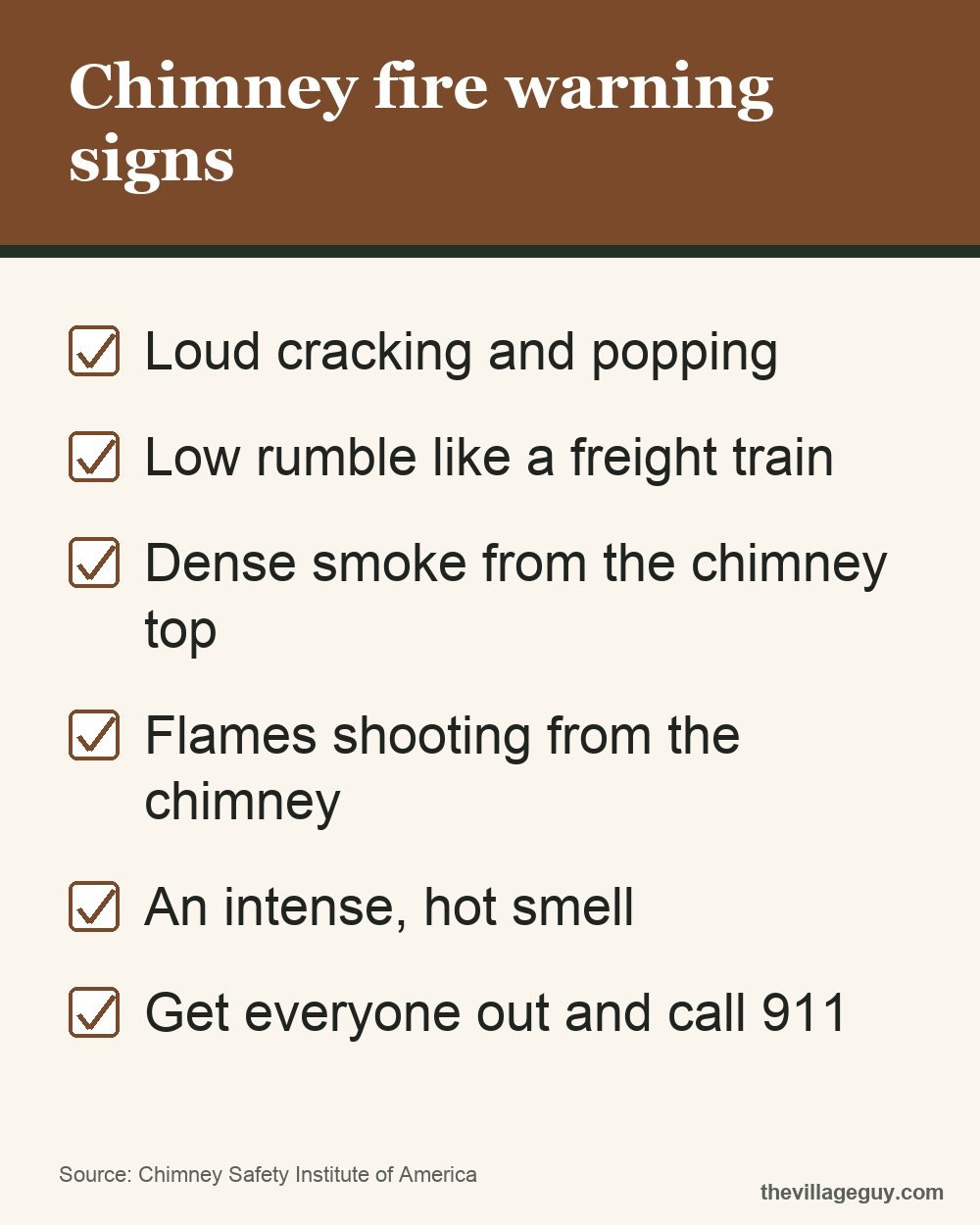
- A loud cracking and popping noise, or a low rumble that sounds like a freight train or low-flying airplane.
- A lot of dense smoke, or flames or dense smoke shooting from the top of the chimney.
- An intense, hot smell.
Safety: If you suspect a chimney fire, get everyone out of the house and call 911. Do not go back in to tend the stove. If you even suspect a chimney fire, CSIA advises having a certified chimney sweep evaluate the chimney before you use the stove again.
Seasonal maintenance list:
- Book a chimney inspection and sweep before the heating season starts.
- Check the chimney cap and spark screen for soot buildup that can choke the draft.
- Inspect door and glass gaskets and replace any that are flattened, frayed or loose.
- Clean or inspect the catalytic combustor or baffles as the manual directs.
- Look for cracks in firebricks, the stove body and the stovepipe.
- Schedule a mid-season flue check if you burn heavily or had any damp wood.
- Replace CO and smoke alarm batteries and test every alarm.
Wood stove safety: fire and carbon monoxide
Wood stove safety comes down to two hazards: things catching fire, and carbon monoxide (CO) getting into the living space. The U.S. Fire Administration says to keep anything that can burn at least 3 feet from heat sources, including wood stoves and fireplaces, and to have heating equipment and chimneys cleaned and inspected each year by a professional.
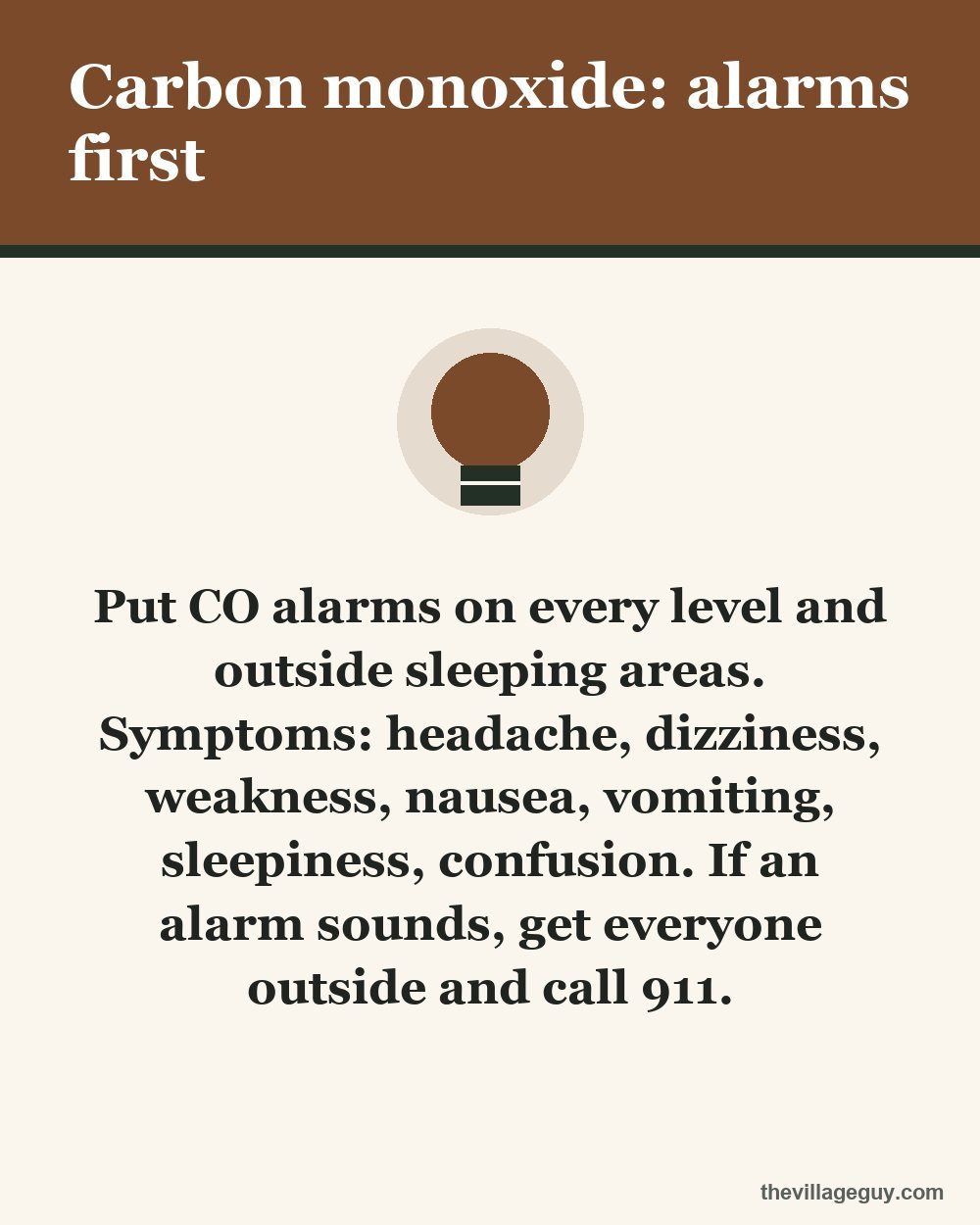
Carbon monoxide is invisible and odorless. The Consumer Product Safety Commission recommends battery-operated CO alarms, or alarms with battery backup, on every level of the home and outside sleeping areas, and lists the symptoms of CO poisoning as headache, dizziness, weakness, nausea, vomiting, sleepiness and confusion. CPSC says more than 200 people in the United States die every year from accidental non-fire-related CO poisoning.
Safety: If a CO alarm sounds or anyone has those symptoms, get everyone outside into fresh air and call 911 or the fire department; do not stay to find the cause. If you smell smoke indoors, EPA advises shutting down the stove, opening a window, making sure the flue is open, and calling a professional installer or chimney sweep. Never use a wood stove with a cracked body, broken glass or a door that will not latch, and follow your manufacturer’s instructions and local codes at all times.
Around the stove
- Keep furniture, curtains, drying laundry, kindling and newspapers at least 3 feet away, or farther if the manual says so.
- Keep children and pets back from hot surfaces with a hearth gate or barrier.
- Never dry clothes or boots on or against the stove.
- Keep a fire extinguisher in the room and know how to use it.
- Watch your local air quality forecast and observe burn bans; EPA notes wood smoke can trigger asthma attacks and has been linked to heart attacks in people with heart disease.
Wood heat during winter outages
A wood stove is a great comfort when the power goes out in an ice storm, but it heats the rooms around it far better than distant bathrooms and crawl spaces. If you rely on it to carry the house through an outage, read at what temperature pipes freeze and plan for the cold corners, and never bring generators, grills or camp stoves indoors to supplement it.
Troubleshooting common problems
| Problem | Likely cause | What to try |
|---|---|---|
| Smoke spills into the room on startup | Cold flue not drafting yet | Use a natural starter and small kindling to warm the flue; open the door slowly; crack a nearby window if your manual suggests it |
| Smoke into the room during reloads | Door opened too fast, or fire too low | Open the air first, wait a minute, then open the door slowly |
| Fire smolders and hisses | Wet wood or air turned down too early | Meter-test the wood; burn drier splits; open the air until flames are active |
| Glass blackens quickly | Wet wood or too little air | Same fixes; EPA lists dirty glass as a sign of both |
| Visible smoke from the chimney | Fire needs more air or wood is too wet | Open the air; check moisture; avoid overloading |
| Wood burns too fast | Air left wide open, very dry small splits, or leaky gasket | Turn down in steps once burning well; use larger, denser splits; check the door gasket |
| Stove or pipe glows red | Overfiring | Close the air to the minimum setting and do not add wood; have the stove and pipe inspected before reuse |
| Smell of smoke indoors with the stove running | Leak, blockage or draft problem | Shut down, ventilate, confirm the flue is open, call a professional (EPA) |
For more country-living guides, from frozen pipes to backyard chickens, browse all The Village Guy guides.
Wood Stove FAQ
Should the damper be open or closed on a wood stove?
Fully open whenever you light the stove or reload it, so the fire gets air and the flue warms up. Once the load is burning well, reduce the air control (and any flue damper your installation has) in steps, as the manual directs. CSIA warns that closing dampers or air inlets too soon or too much is a leading cause of creosote buildup.
How often should you clean a wood stove chimney?
Have it inspected at least once a year, which is what NFPA 211 calls for, and swept whenever the inspection finds significant buildup. CSIA uses 1/8 inch of sooty buildup as the trigger for sweeping masonry fireplaces. Heavy burners and anyone burning damp wood may need a mid-season check as well.
Can you leave a wood stove burning overnight?
Yes, if the stove is correctly installed, loaded within the limits in its manual, latched shut, and the house has working smoke and CO alarms. The safe way is to let a fresh load catch fully before turning the air down, rather than choking a full firebox of unburned wood, which builds creosote.
Why does my wood stove glass turn black?
EPA lists dirty glass alongside smoldering fires and chimney smoke as signs the fire needs more air or the wood is too moist. Burn wood that meters below 20 percent, give each load enough air to burn with active flames, and the glass should stay clearer between cleanings.
Sources
- EPA Burn Wise: Best Wood-Burning Practices (moisture, what never to burn, ashes in a covered metal container, no gasoline or kerosene)
- EPA Burn Wise: Tips for a Better Burn (kindling, natural starters, door open at startup, reloading, coal valley, inch of ash, smoke check)
- EPA: Wet Wood Is a Waste brochure (clean heating checklist, dirty glass and smoke signs, wood smoke health effects)
- EPA Burn Wise: Frequently Asked Questions (catalytic and non-catalytic efficiency, catalyst life, overloading, annual inspection and cleaning, fire logs)
- EPA Burn Wise: Energy Efficiency and Your Wood-Burning Appliance (certified stoves up to 50 percent more efficient, one third less wood, pre-1990 stoves)
- EPA Burn Wise: Installation and Maintenance (professional installation, clearances, smoke smell response)
- Chimney Safety Institute of America: Homeowner Resources (NFPA 211 annual inspection, 1/8 inch sweeping guideline)
- CSIA: Preventing Chimney Fires (creosote causes, chimney fire signs, call 911)
- U.S. Fire Administration: Heating Fire Safety (3-foot clearance, annual professional cleaning and inspection)
- CPSC: Carbon Monoxide Information Center (alarm placement, symptoms, annual deaths)
- Illinois Extension: Burning Safety (ash container placement, ash on soil, annual chimney inspection)
- Woodstock Soapstone Co.: Mid-Winter Wood Stove Maintenance (signs of a worn catalytic combustor, chimney cap checks)
- EPA: Burn Wise Best Practices Videos (video listings)