An empty nest box in November is usually a calendar problem, not a chicken problem. When you ask why are my chickens not laying eggs, the answer most of the time is short days, the yearly molt or simple age, and all three fix themselves or can be managed. The trick is ruling out the handful of causes that do need action, like a frozen waterer, a feed mix diluted by treats, mites or disease.
This page works like a diagnosis: a quick table to match what you are seeing to one of 9 causes, then a section on each cause with what extension poultry specialists recommend. A drop in eggs is also one of the first signs of illness, so the vet and reporting guidance is here too.
Quick answer: Most hens slow or stop laying when daylight falls below about 14 hours, during their yearly molt, when they go broody, or as they pass two to three years old. If none of those fit, check for empty waterers or feeders, too many treats, stress, parasites, hidden nests and signs of disease, and call a vet if birds look sick.
In this guide
Why Are My Chickens Not Laying Eggs? Match the Clue to the Cause
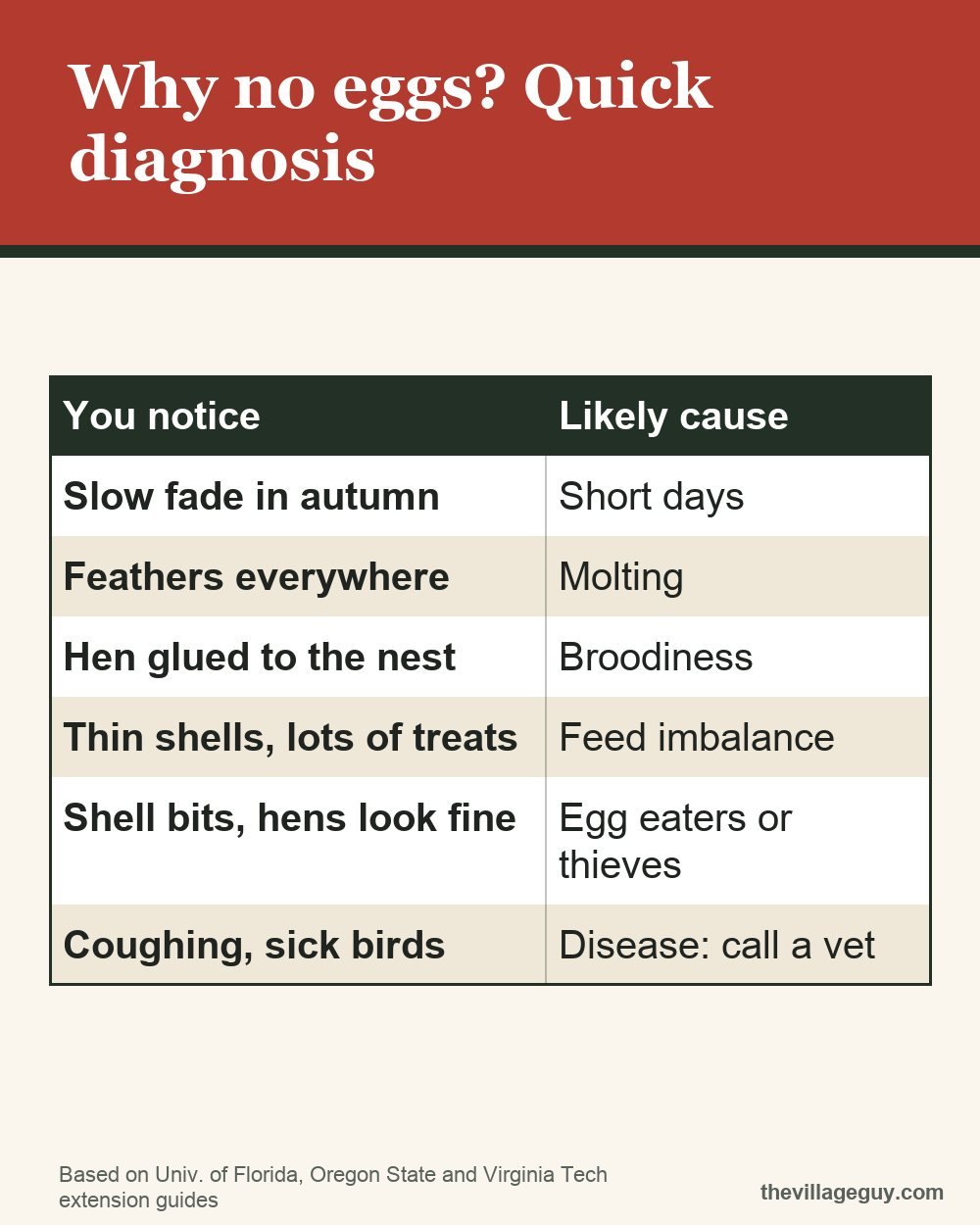
Start with what the flock looks like, not with what the internet says to buy. The University of Florida’s backyard flock guide suggests working through a list of questions: how old the birds are, how much they eat, whether feed or light changed, whether water is clean and plentiful, and whether any birds look unwell. This table puts those questions into a quick sort.
| What you notice | Most likely cause | Go to |
|---|---|---|
| Laying tapered off in autumn, birds look healthy | Short days | Cause 1 |
| Feathers everywhere, scruffy hens, pin feathers | Molting | Cause 2 |
| Hens are three or more years old | Age | Cause 3 |
| One hen sits in the nest all day and growls | Broodiness | Cause 4 |
| Thin or soft shells, lots of scratch or scraps fed | Feed imbalance | Cause 5 |
| Sudden drop after a freeze or a busy weekend away | Water or feed ran out | Cause 6 |
| Recent move, new birds, predator visit, heat wave | Stress | Cause 7 |
| Hens act normal but you find fewer eggs, or shell bits | Hidden nests, egg eaters or thieves | Cause 8 |
| Coughing, diarrhea, lethargy, swelling, deaths | Parasites or disease | Cause 9 |
Cause 1: Short Days (Do Chickens Lay Eggs in Winter?)
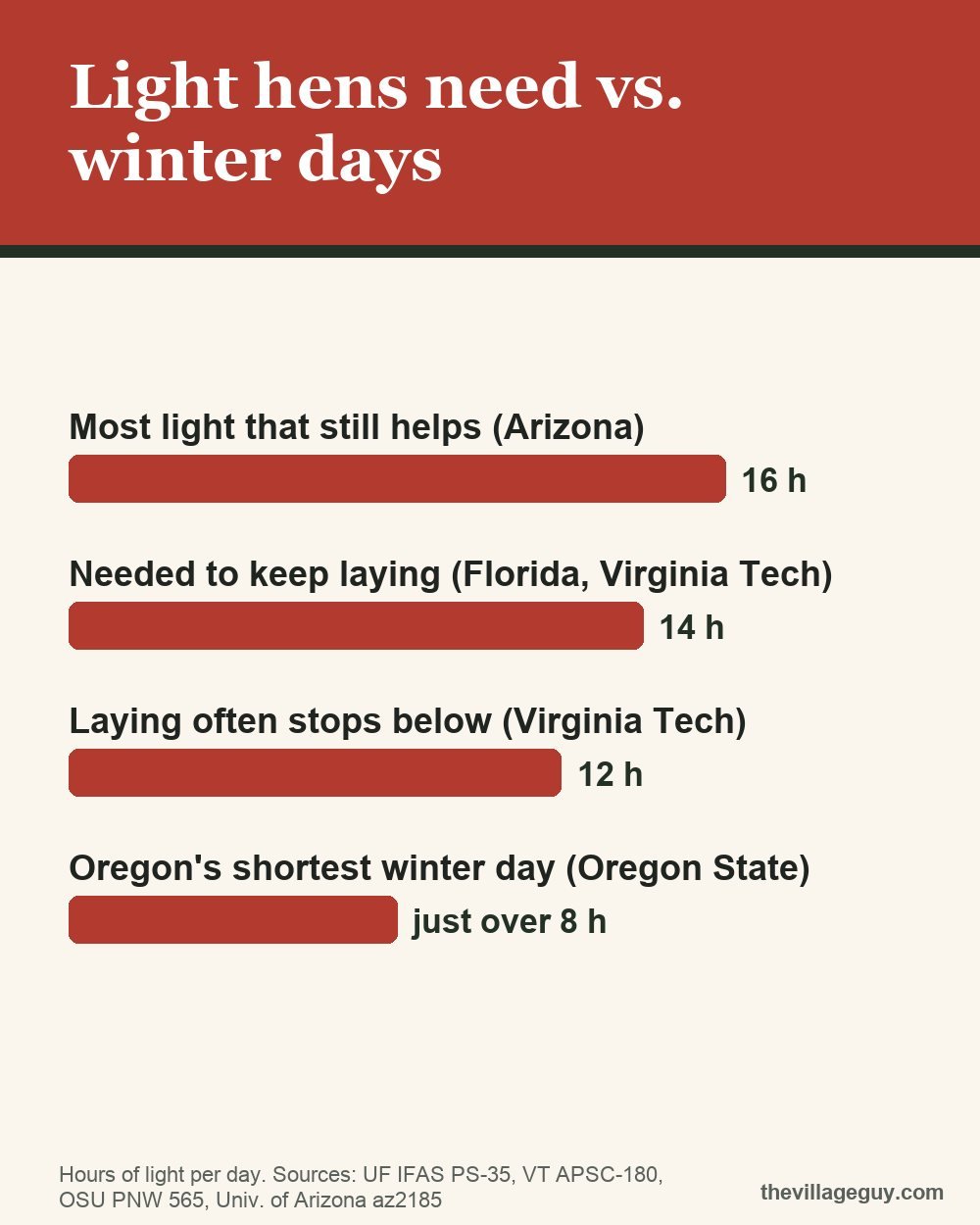
Light, not cold, is the main switch. Hens need about 14 hours of day length to keep laying, according to both the University of Florida and Virginia Tech, and Virginia Tech notes that production drops and often stops once days fall below 12 hours, which in Virginia happens naturally from about October through February. Oregon State’s guide puts numbers on it: day length there shrinks from nearly 16 hours in June to just over 8 hours in December.
So do chickens lay eggs in winter? Some do, at a slower rate, but a flock on natural light alone should be expected to slow sharply or stop, and the University of Florida says such hens would be expected to resume in spring. That pause is normal and does the hens no harm. If you would rather have eggs, the next section shows how to add light properly.
How to Get Chickens to Lay Eggs in Winter: A Light Plan
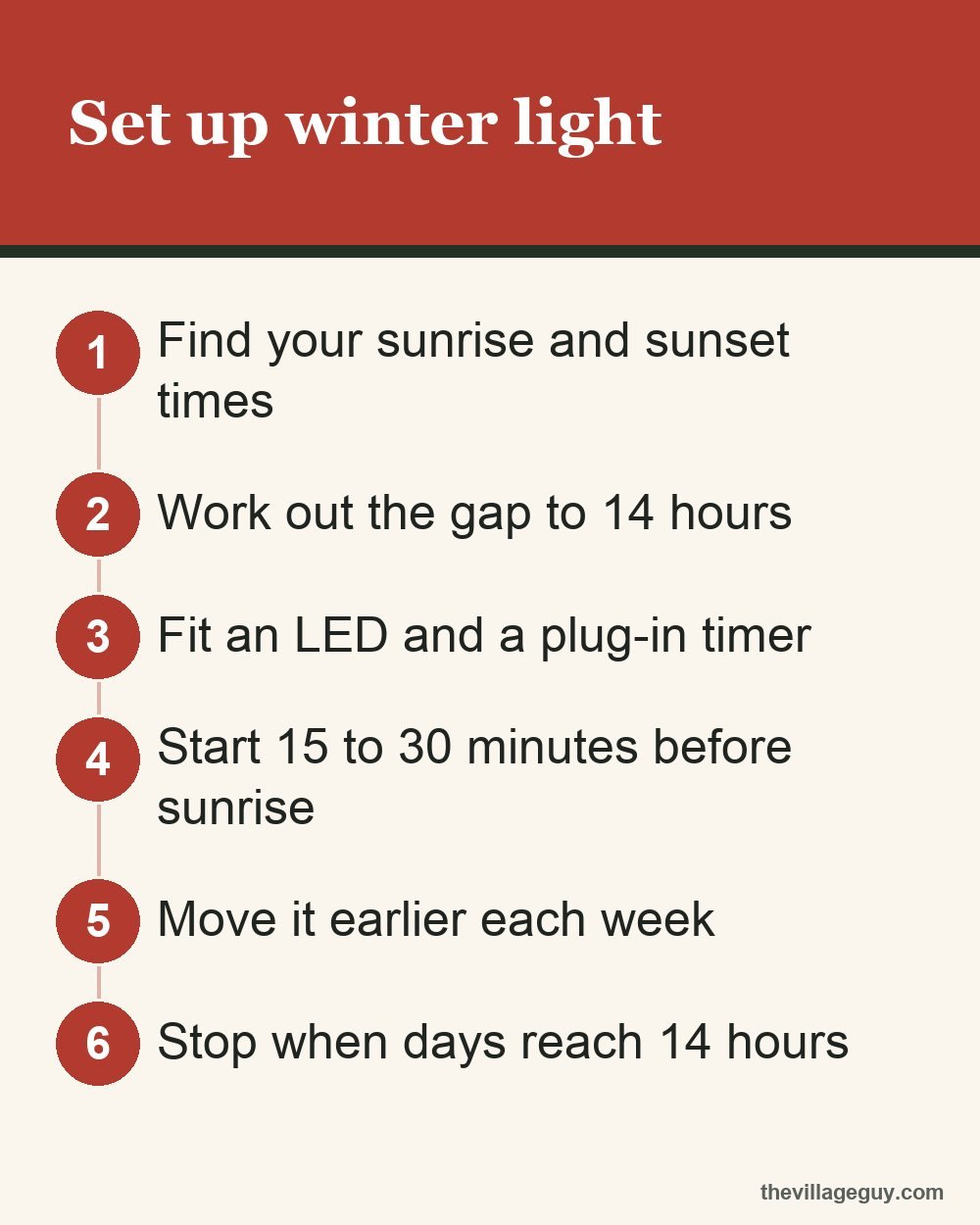
The University of Arizona’s lighting guide for backyard flocks gives the clearest recipe: aim for 14 to 16 hours of light, add all of the extra light before sunrise so hens still settle onto the roost at natural dusk, and change the schedule in steps of 15 to 30 minutes a week rather than all at once. Going beyond 16 hours does not add eggs, so lights should never run all night. Virginia Tech also asks for at least 6 hours of continuous darkness.
A worked example
Say your late-December sunrise is 7:20 a.m. and sunset is 4:50 p.m. That is 9 hours 30 minutes of daylight, so you are 4 hours 30 minutes short of 14. Set the timer to switch on 30 minutes before sunrise (6:50 a.m.) in week one, then move it 30 minutes earlier each week. After nine weeks the light comes on at about 2:50 a.m. and the hens get their 14 hours. In practice the gap shrinks as days lengthen after the winter solstice, so recheck sunrise times every couple of weeks, as Arizona suggests, and switch the lights off once natural day length reaches 14 hours in spring.
Light without fire risk
The light does not need to be bright: enough to read a newspaper at bird level, says Oregon State. Arizona suggests one 9-watt LED or one 60-watt incandescent bulb per 200 square feet, in a warm tone, hung securely away from water and birds. Use a timer, because Oregon State warns that even a one-day lapse can set production back, and Arizona notes that missing a day or two can trigger a molt.
Safety: Do not use a heat lamp as your light source. Arizona’s extension guide says heat lamps carry a large risk of fire and should be avoided. Use an LED in a fixture rated for damp locations, keep cords out of pecking reach, and see our guide to keeping chickens warm in winter without a heat lamp for coop fire precautions.
Extra light is a choice, not an obligation. Oregon State points out that hens kept on long days can molt incompletely and never fully return to production, and suggests turning lights off for about six weeks during a hen’s second winter so she can finish a full molt before going back to long days.
Cause 2: Chicken Molting
Every year hens drop their old feathers and grow new ones, and laying stops while they do it. It usually starts in autumn as days shorten, and Purina notes the first molt typically comes at around 18 months old. The University of Kentucky’s molting bulletin says feathers usually go in order: head, neck, chest, body, wings, then tail. Some hens look almost bald; others shed so gradually you barely notice.
How long it lasts varies more than most guides admit. Kentucky says commercial-strain hens can be through a molt in four to six weeks, while heritage-type birds may take three to four months. Purina tells owners to expect about eight weeks, and up to sixteen for some birds. The University of Florida adds that good layers lay for about 50 to 60 weeks before molting, while poorer layers and older hens molt more often.
How to help a molting hen
Feathers are mostly protein, so feed matters. Purina recommends a complete feed with about 19% protein during molt; if you switch, keep oyster shell available and avoid medicated chick starter for laying hens. Handle molting birds as little as possible, because new feather shafts are sensitive, and keep bedding clean. Kentucky adds that a molt in the middle of a laying cycle can be slowed or reversed by increasing light and dietary protein, and that unexpected molts are often triggered by a broken timer, stress, poor nutrition, dehydration or extreme heat.
One distinction worth knowing: Oregon State notes that bare patches on one spot, such as the back or neck, are almost always caused by feather picking, not molt. A whole flock dropping feathers fast can also signal a serious stress like running out of water.
Causes 3 and 4: Age and Broody Hens
Cause 3: age
Hens do not lay for their whole lives. Oregon State, Virginia Tech and the University of Florida all say production stays good for about two to three years and then declines, with longer and more frequent molts. Florida stresses that this varies greatly from bird to bird, so a four-year-old who still lays a few eggs a week is not unusual. Oregon State also lists reproductive problems that stop laying for good in older hens, including egg-binding and prolapse; a hen straining, sitting hunched or showing tissue at the vent needs a vet.
Cause 4: broodiness
A broody hen has decided to hatch eggs, fertile or not. She flattens herself in the nest, puffs up, growls or pecks when you reach under her and stops laying. Oregon State notes that Cochins and Silkies go broody often, while Leghorns rarely do. To break it, collect eggs daily from nests and hiding places so nothing builds up, and if a hen keeps sitting, block her from the nest boxes for several days; Oregon State says the broody behavior then stops and she returns to laying.
Causes 5 and 6: Feed, Treats and Water Gaps
Cause 5: a diet diluted by extras
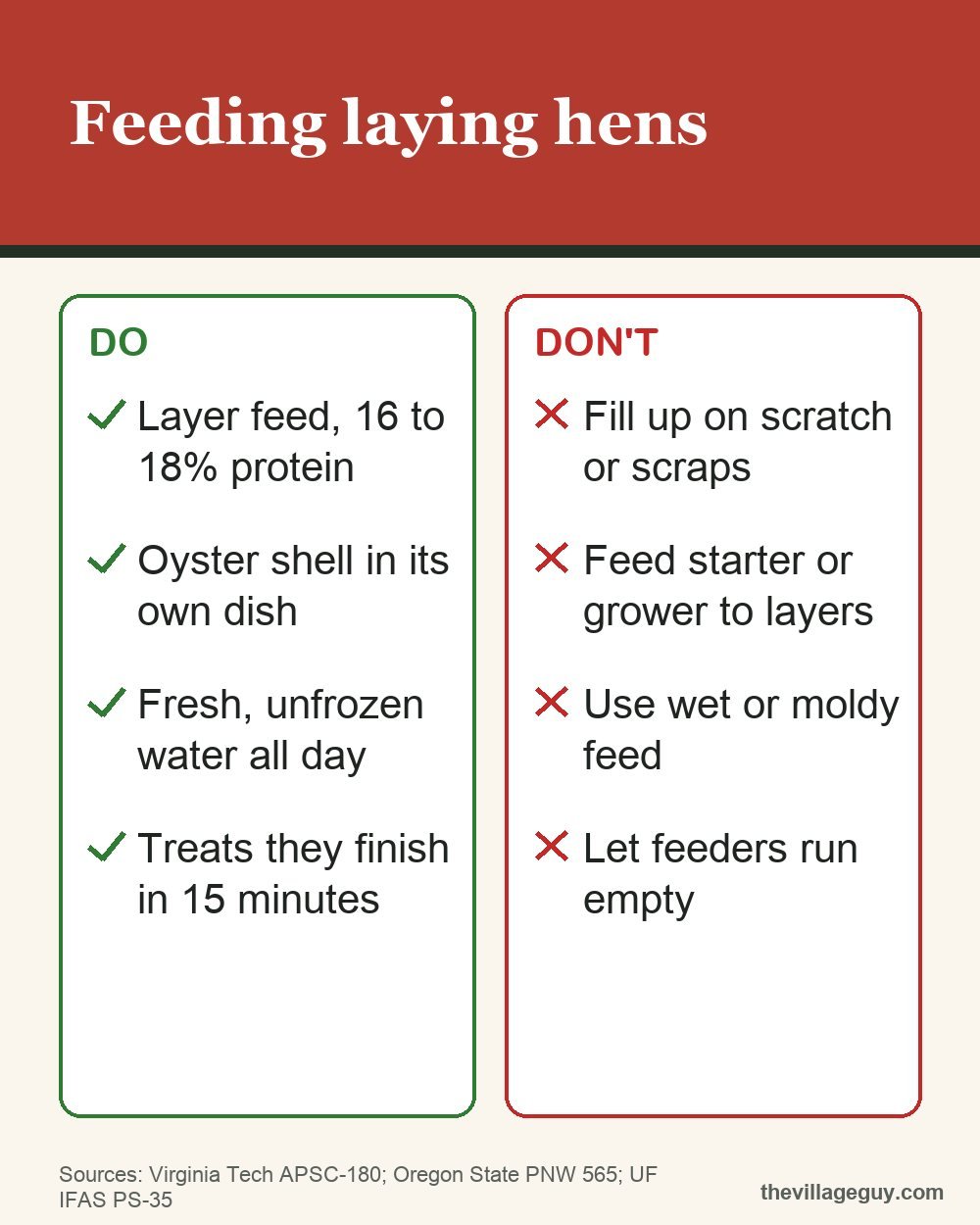
The University of Florida is blunt: whole grains, scratch and table scraps unbalance a laying hen’s diet, and too little energy, protein or calcium drops production. Virginia Tech recommends a layer feed with 16 to 18% protein and oyster shell available at all times. Oregon State’s rule of thumb for treats is to give only what the hens clean up in about 15 minutes, and never to feed starter or grower rations to laying hens. In Florida’s table of clues, a calcium shortfall shows up as more shell-less eggs.
Cause 6: empty waterers and feeders
Running out matters more than most people expect. Florida says a lack of water for several hours will probably cause a drop in production, and that hens are more sensitive to running out of water than feed. Clues include birds crowding around the waterer and darkened, bluish combs. A frozen waterer counts as an empty one, which is why winter slumps sometimes have nothing to do with daylight. Florida also warns that feed stored more than about two weeks can turn moldy, and wet feed should be thrown out.
Causes 7 and 8: Stress and Eggs That Go Missing
Cause 7: stress
Oregon State and Virginia Tech list the usual stressors: moving or handling the flock, adding or removing birds (including swapping a rooster), fright, predators, damp or drafty housing and overheating. Florida notes that severe heat cuts feed intake, egg numbers and egg size, and that shade, ventilation and plenty of cool water help. After a single scare, laying often picks back up once routine returns; repeated stress is worth tracking down.
Cause 8: the eggs are laid, then lost
Florida’s list of things that look like a laying drop includes snakes and predators eating eggs, hens eating eggs, heavy breakage and free-range hens hiding eggs instead of using the nests. Shell fragments, yolk on beaks or a rat run near the coop are clues. Utah State University Extension recommends one nest box for every four to five hens, set at least 18 inches off the floor, and Arizona advises keeping nests dim. Collect eggs at least daily. If you stumble on a hidden stash, check them before using any: our guide on how to tell if eggs are bad covers backyard finds of unknown age.
Cause 9: Parasites and Illness (When to Call a Vet)
Virginia Tech and Oregon State both note that a drop in egg production is often one of the first signs of disease. Parasites are the gentler end of the scale. Florida reports that lice can cut production by as much as 10%, and heavy infestations by 20%, while the northern fowl mite, the most common poultry mite, is usually found around the vent and can cause anemia. Internal worms bring unthriftiness, weight loss and fewer eggs.
Infectious diseases hit harder. Florida’s guide says infectious bronchitis can cut production by as much as 50% and leave soft-shelled or misshapen eggs long after an outbreak, and that with Newcastle disease production may drop to zero and take five to six weeks to recover. The USDA’s Defend the Flock program lists decreased egg production and soft-shelled or misshapen eggs among the warning signs of serious bird diseases, including avian influenza.
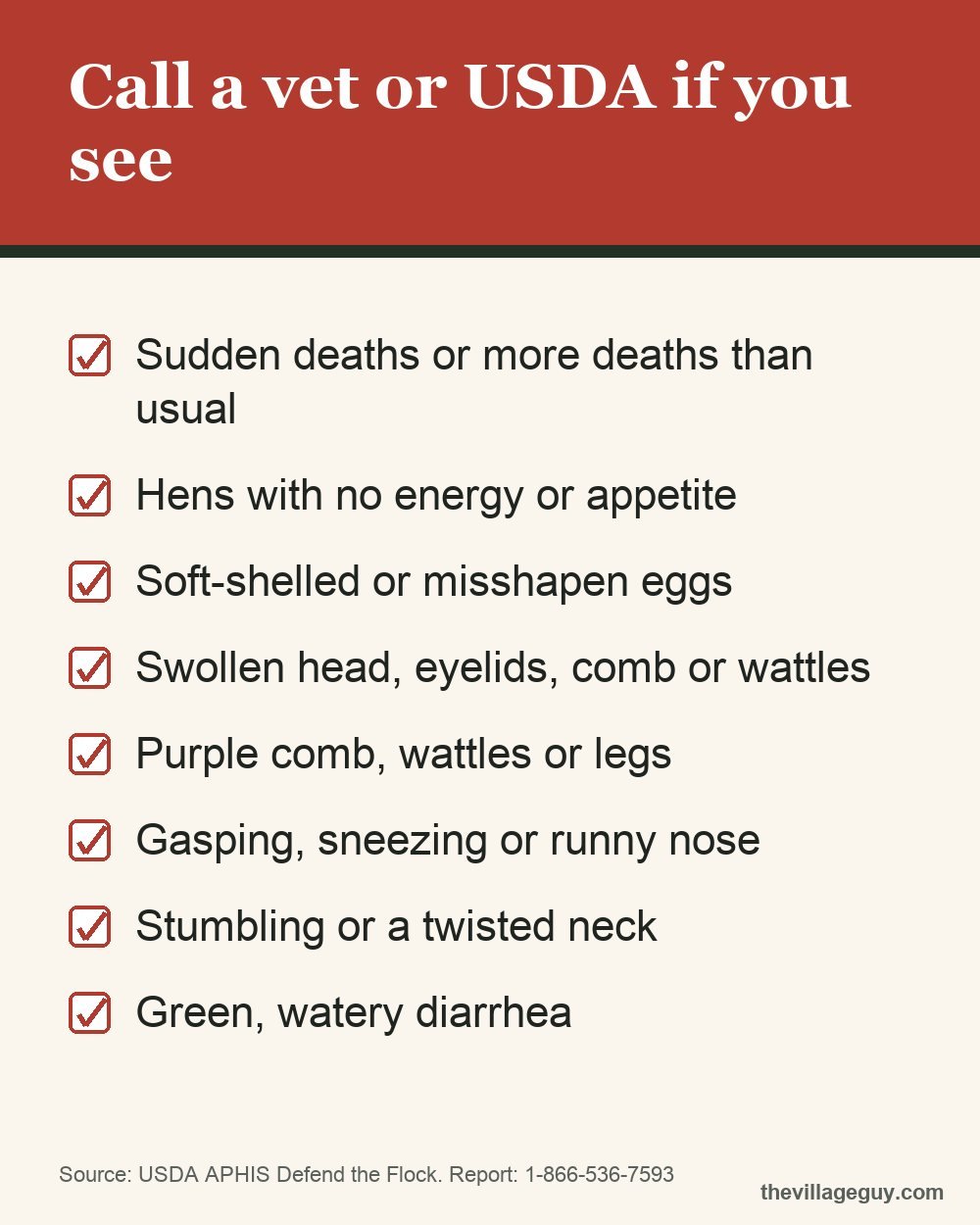
Safety: If several birds are sick or dying, act quickly. USDA APHIS asks owners to report sick or dying birds to their state veterinarian or to USDA at 1-866-536-7593. Do not treat birds with medications on your own: diagnosis and dosing belong with a veterinarian, and many poultry drugs carry egg withdrawal periods that must be observed before eggs are eaten. Florida’s guide also recommends sending sick or recently dead birds to a state diagnostic lab.
Prevention is cheaper than diagnosis. Virginia Tech recommends buying chicks or hatching eggs from NPIP-certified hatcheries and keeping new adult birds separate for a few weeks before they join the flock.
Get Them Laying Again: Copy-Ready Checklist
Work through these in order. The first block costs nothing and solves most cases.
Today
- Write down each hen’s approximate age and the date laying dropped.
- Check that every waterer is full, clean and unfrozen, and note whether it ran dry.
- Confirm the feeder holds layer feed with 16 to 18% protein, not scratch or grower.
- Put oyster shell out in a separate dish.
- Look under the hens for feathers, pin feathers and bare patches.
- Part the vent feathers on two or three birds and look for mites or lice.
- Walk the run and hedges for hidden nests, shell bits and signs of rats or snakes.
This week
- Cut treats back to what the flock finishes in about 15 minutes.
- Block a broody hen from the nest boxes for several days.
- Count nest boxes and add one for every four to five hens if you are short.
- Throw out wet or moldy feed and buy only what the flock eats in a few weeks.
- Decide whether to add winter light or let the hens rest until spring.
If you add light
- Look up local sunrise and sunset times and work out the gap to 14 hours.
- Install an LED fixture and a plug-in timer, never a heat lamp.
- Start the light 15 to 30 minutes before sunrise and move it earlier each week.
- Recheck the timer every couple of weeks as sunrise shifts.
For more seasonal flock and homestead jobs, browse the full list of village life guides, and see how this site sources its advice.
Egg Laying FAQ
Why do chickens stop laying eggs suddenly?
A sudden, flock-wide stop usually points to something that changed in the last few days rather than a slow seasonal slide. Ask three things: did water or feed run out or freeze, did a light timer fail or a predator visit, and does any bird look sick. If the answers are no and birds start dying or looking ill, treat it as a possible disease and call your vet or the USDA number above.
Do chickens stop laying when it is hot?
They often slow down. The University of Florida says high temperatures reduce feed intake, egg production and egg size, and lists panting and heavy drinking as clues. Shade, good airflow and plenty of cool water are the remedies it recommends. Expect laying to recover as the weather eases.
Will my hens start laying again after molting?
Yes, healthy hens normally return to laying once their new feathers are in, though the University of Arizona notes molting can stop production for 6 to 8 weeks and heritage breeds may take longer. Oregon State notes that as hens age, their molts become more frequent and last longer.
How many nest boxes do my hens need?
Utah State University Extension recommends one nest box for every four to five hens, 12 to 15 inches high and wide, at least 12 inches deep and at least 18 inches off the floor. Too few boxes can push hens to lay in corners, where eggs get broken, eaten or missed.
Sources
- University of Florida IFAS Extension: Factors Affecting Egg Production in Backyard Chicken Flocks (PS-35) (14-hour day length, water and feed gaps, diet imbalance, parasites and disease effects, age, diagnostic questions)
- Oregon State University Extension: Why did my chickens stop laying? (PNW 565) (day length, lighting lapses, molt, broodiness, treats, stressors)
- Virginia Tech Extension: Why Have My Hens Stopped Laying? 5 Factors that Impact Egg Production (light below 12 hours, 16 to 18% protein, oyster shell, stress, NPIP and quarantine)
- University of Arizona Extension: Lighting Schedules for Arizona Backyard Laying Flocks (morning light, weekly steps, 16-hour limit, bulb size, heat lamp fire risk)
- University of Kentucky Extension: Molting Small-scale Commercial Egg Flocks in Kentucky (ASC-236) (feather loss order, molt length, molt triggers)
- Purina Animal Nutrition: Molting Chickens: Tips for Feather Regrowth and Care (first molt around 18 months, 8 to 16 weeks, 19% protein feed)
- USDA APHIS Defend the Flock: How to Spot Sickness (warning signs, reporting number)
- Utah State University Extension: Housing Backyard Chickens (nest box numbers and size)