Raising chickens for beginners comes down to five things: checking that your town allows them, getting a sensible number of birds, giving them a predator-proof coop with enough room, feeding a complete ration with clean water every day, and keeping disease out. Get those right and a small flock is one of the easiest animals on a country property, with daily chores that Colorado State University puts at under 15 minutes on most days.
This is the overview page for the chicken and egg section of the Village Guy guides. It walks through the first year in order, from paperwork to the first egg, gives sourced numbers for space, feed and costs, and links to the deeper guides when you need detail on winter care, feeding, laying, lifespan and egg handling.
Quick answer: Check local rules first, then start with three to six hens (chickens should never be kept alone). Give each bird about 3 square feet inside the coop and 8 to 10 square feet of run, with hardware cloth against predators, one nest box per four to five hens and 6 to 10 inches of roost each. Feed a complete feed for their age, keep water clean, collect eggs daily, wash your hands after every visit, and call a vet when a bird looks sick.
In this guide
- Raising chickens for beginners: the first-year plan
- Check local rules first
- How many chickens should I get?
- Chicks or pullets, and brooding
- Coop and run: space, roosts, nests, predators
- Feed and water basics
- The daily, weekly and seasonal routine
- Health basics and biosecurity
- What keeping chickens costs
- Backyard chickens FAQ
Raising chickens for beginners: the first-year plan
Learning how to raise chickens is mostly a matter of doing the right job at the right time of year. Chicks bought in spring start laying by late summer or fall, which gives them long days to settle in. Here is how a typical first year runs for someone starting from scratch.
| When | Main job | Read more |
|---|---|---|
| Winter | Check rules, decide numbers and breeds, plan or build the coop | Sections 2 to 5 below |
| Early spring | Set up the brooder, buy chicks from a clean source | Chicks and brooding |
| Spring (weeks 1 to 6) | Brood chicks, lower the heat each week, feed starter | Chicks and brooding |
| Early summer (6 weeks on) | Move fully feathered birds to the coop, switch to grower feed | Feed and water |
| Late summer to fall (about 18 to 22 weeks) | Switch to layer feed when laying starts, open the nest boxes | Laying age guide |
| Fall and winter | Expect a laying slowdown, keep water liquid, check ventilation | Winter care guide |
The deeper guides fill in each stage: when chickens start laying eggs covers the signs a pullet is about to lay, and keeping chickens warm in winter explains why ventilation matters more than heat for adult hens.
Check local rules before you buy a single chick
Rules on poultry are set locally, and they vary from town to town and even street to street. Cornell’s Small Farms Program notes that municipalities may ban poultry outright, ban roosters, limit the number of birds, or require permits. Colorado State University gives Fort Collins as an example, where a permit costs $30 and a site inspection is required, and warns that many homeowners associations forbid chickens even where the town allows them.
Living outside town limits usually means fewer restrictions, but not none. County zoning, deed covenants and setback rules for coops can still apply, and NC State Extension suggests a call to your local animal control or zoning office before you order birds so you know what types and how many you can keep.
- Read your town or county ordinance for poultry, livestock or “fowl”
- Check HOA covenants or deed restrictions if you have them
- Ask whether roosters are allowed and whether there is a hen limit
- Find out whether a permit, fee or inspection is required
- Note any setback distance for coops from property lines or houses
- Tell the neighbors your plans before the birds arrive
Tip: If roosters are banned where you live, buy sexed pullet chicks rather than “straight run.” Colorado State notes that straight-run chicks at farm stores carry about a 50 percent chance of being roosters, and you cannot reliably tell for weeks.
How many chickens should I get?
Start with the minimum that keeps birds happy, then size up to your egg habit. PetMD, a pet health site, says chickens are social animals that should never be kept alone and that most backyard flocks do well with at least three to six hens. That floor also protects you: with only two birds, losing one leaves a lonely survivor.
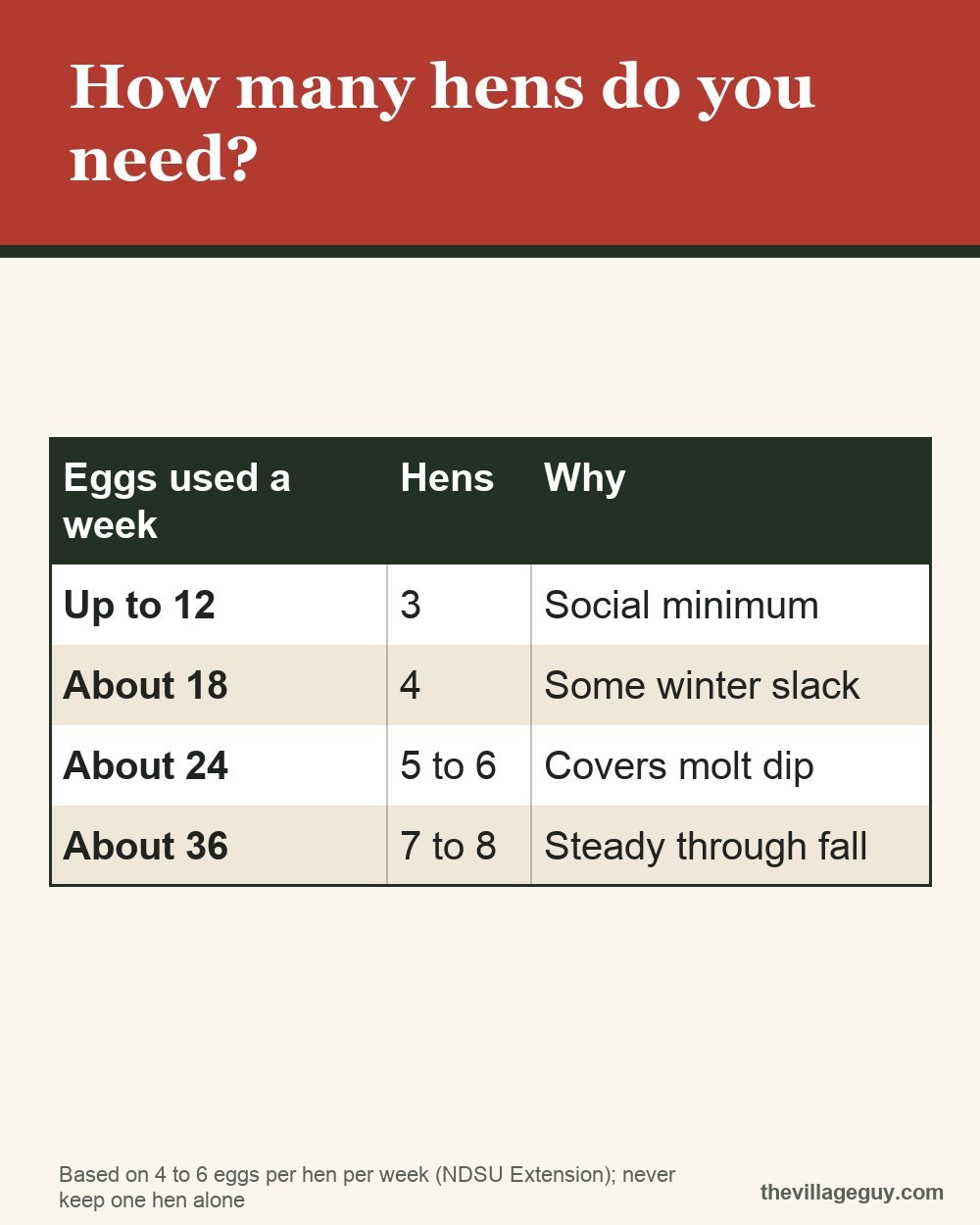
For egg planning, NDSU Extension says most laying hens produce about four to six eggs a week, and Utah State Extension estimates that four to five hens supply roughly two to four eggs a day. Production drops in short winter days and during the yearly molt, so plan a bird or two of slack.
| Eggs your household uses a week | Hens to start with | Why |
|---|---|---|
| Up to 12 | 3 | The social minimum already covers it |
| About 18 | 4 | Four hens at 4 to 6 eggs a week, with winter slack |
| About 24 (2 dozen) | 5 to 6 | Covers the molt and short-day dip |
| About 36 (3 dozen) | 7 to 8 | Extra birds keep supply steady through fall |
Plan for age, too. University of Wisconsin Extension says backyard hens may live 6 to 8 years, most flocks lay for 3 to 4 years, and output, egg size and shell quality fall each year; it suggests adding young pullets every 2 to 3 years. Our guide to how long chickens live covers lifespan by type and planning for the retirement years, and why chickens stop laying runs through daylight, molting, age, broodiness and the other common causes.
Chicks or pullets: how to start your flock
Day-old chicks are cheap and tame up well but need a heated brooder for about a month. Started pullets cost more but skip the brooder entirely; NDSU Extension notes that pullets bought at 15 to 22 weeks are close to laying age. Either way, buy from a clean source: NDSU recommends NPIP-certified hatcheries or breeders (the National Poultry Improvement Plan) and says vaccination against Marek’s disease and coccidiosis is available at extra cost and highly recommended.
Brooding chicks
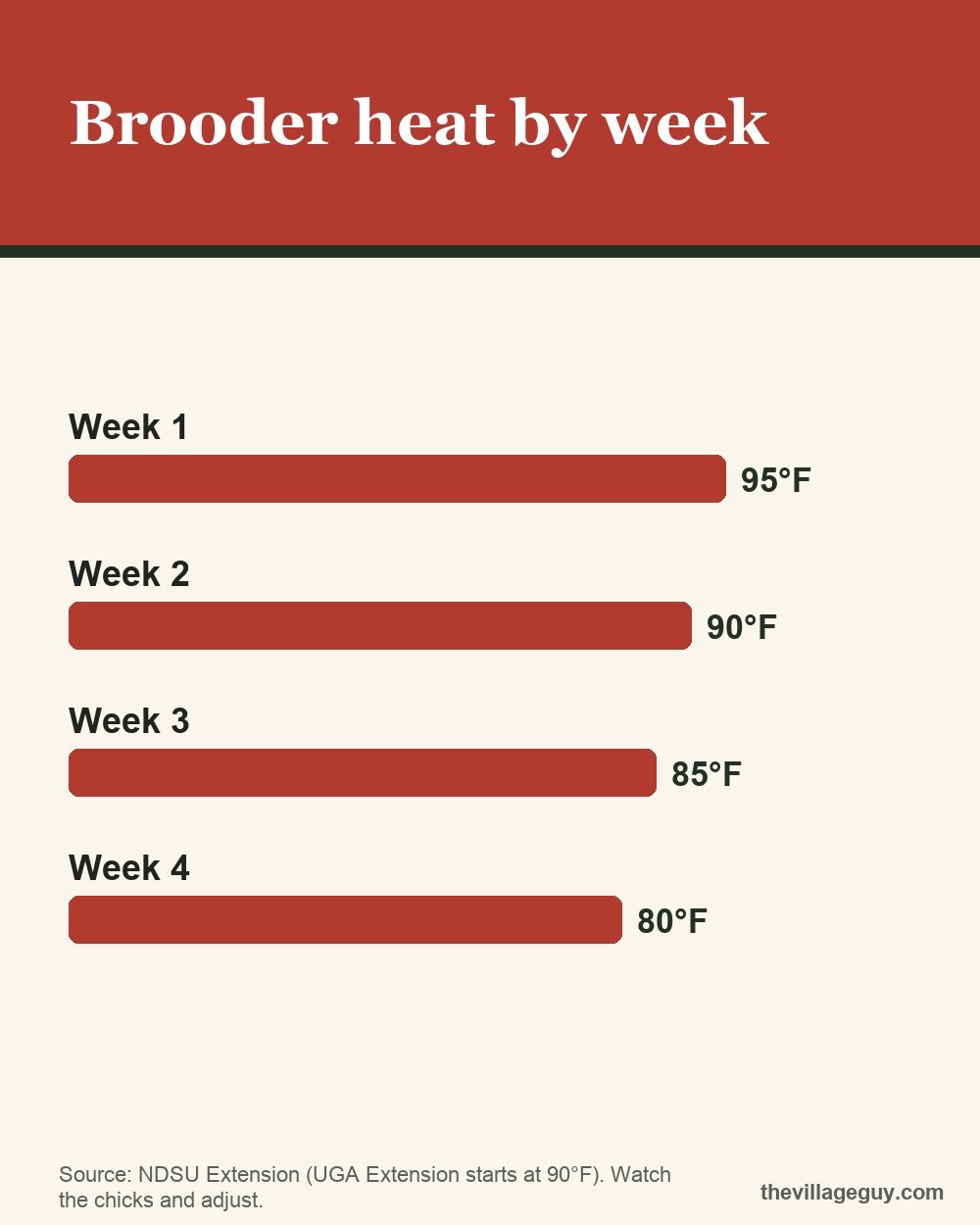
Extension guides agree on a falling temperature schedule but start at slightly different numbers. NDSU says 95°F for chicks a week old or younger; UGA Extension says 90°F at chick level for the first week. Both then drop about 5°F a week. Watch the chicks: huddled under the heat means too cold, birds panting at the edges means too hot.
NDSU allows about half a square foot of brooder space per chick up to six weeks, says chicks are fully feathered at about six weeks, and suggests moving them to the coop once outside temperatures reach at least 65°F. It also advises keeping new chicks apart from older birds until they are fully feathered.
Safety: Heat lamps in brooders and coops are a known fire risk around dry bedding and dust. Clark County, Washington, citing the National Fire Protection Association, advises securing lamps so they cannot fall (a spring clamp alone may not hold), keeping heaters away from anything that can burn, cleaning dust and cobwebs from fixtures, using equipment made for agricultural use and never running extension cords into a coop. NDSU also warns that a heat lamp must be fastened so it cannot drop into the litter.
- Set up and test the brooder two days before chicks arrive
- Hang a thermometer at chick height, not at the top of the box
- Fasten the heat source with a chain or bracket, not just a clamp
- Fill the waterer and starter feeder before you open the chick box
- Lower the temperature about 5°F each week
- Wash your hands every time you leave the brooder
Coop and run: space, roosts, nests and predator-proofing
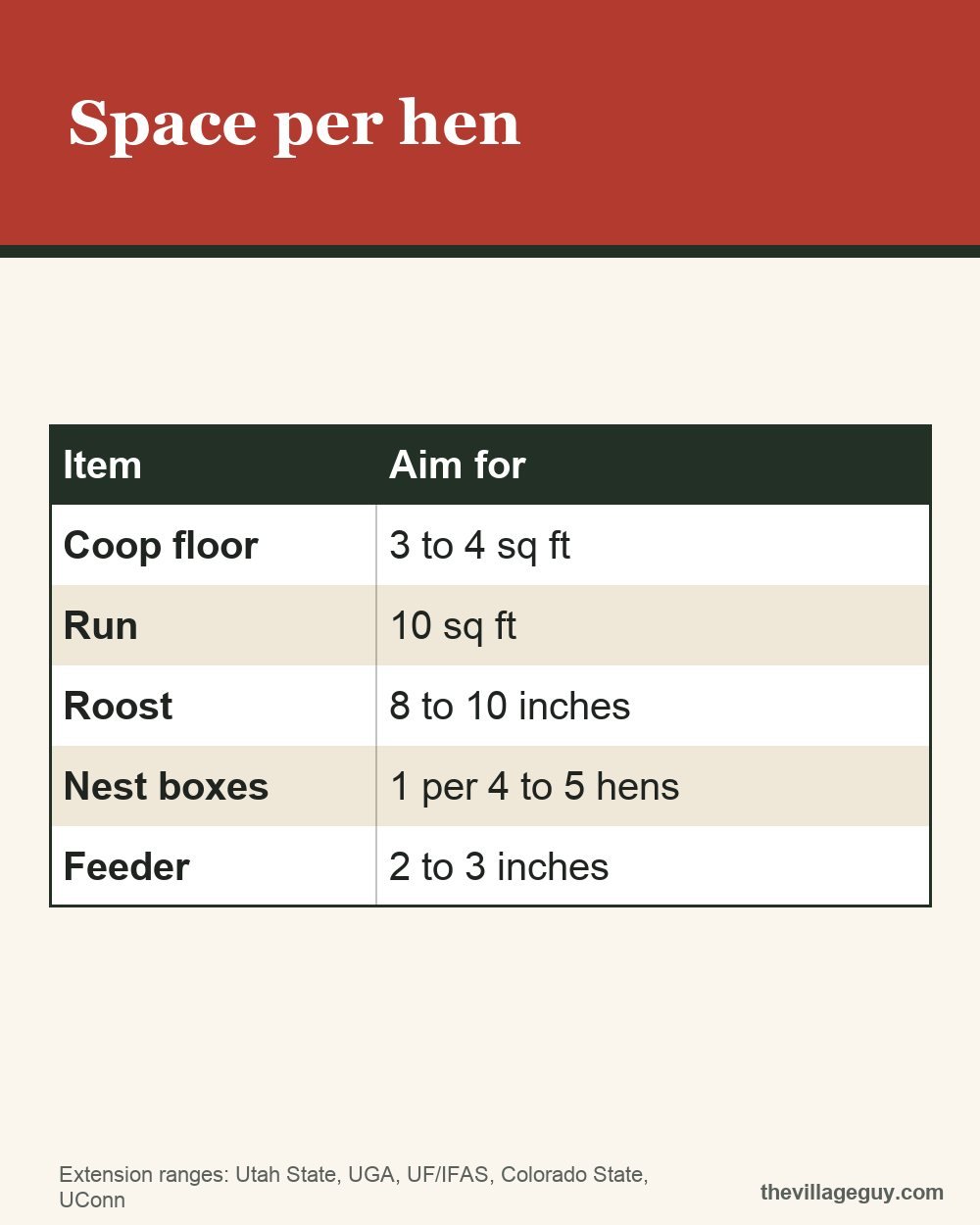
Space advice varies more than you might expect, because sources assume different breeds and different amounts of outdoor time. This table gives the range and a comfortable target for standard-size laying hens.
| Item | Extension range | Comfortable target |
|---|---|---|
| Coop floor | 1.5 to 2 sq ft (Utah State) up to 3 to 3.5 sq ft (UGA) | 3 to 4 sq ft per hen |
| Run | 5 to 8 sq ft (Colorado State) to 8 to 10 sq ft (UF/IFAS) | 10 sq ft per hen |
| Roost | 6 to 10 inches per bird (Utah State, UConn) | 8 to 10 inches |
| Nest boxes | 1 per 4 to 5 hens, about 12 inches square (Utah State, UGA) | 2 boxes for up to 8 hens |
| Feeder | 2 to 3 linear inches per adult (Utah State) | Enough that all can eat at once |
Predator-proofing
In the country, predators are the biggest threat to a new flock. Chicken wire keeps chickens in but not predators out: extension specialists at Utah State and Kentucky note that raccoons reach through it and many predators tear it. Utah State recommends tightly woven hardware cloth with quarter-inch to half-inch openings, and extension guides commonly suggest burying it about 12 inches deep or laying an apron outward to stop diggers. Cover the run top too, since raccoons and rats climb and hawks drop in.
- Cover every window and vent with half-inch hardware cloth, screwed down with washers
- Bury or apron hardware cloth around the run base
- Roof or net the run against hawks and climbing raccoons
- Use two-step latches that raccoon paws cannot open
- Shut the pop door at dusk every night, or fit an automatic door
Good ventilation high in the coop, with no drafts at roost height, keeps birds dry in winter and cool in summer; the winter guide covers the details.
Feed and water basics
Feed is simpler than the feed-store aisle makes it look. Chicks get starter, growing birds get grower, and laying hens get layer feed once eggs begin, with treats kept to a small share of the diet. Utah State warns against feeding layer ration to birds that are not yet laying, because its calcium is too high for them. Our full guide to what chickens eat, by age, with safe treats and foods to avoid has the protein levels, how much a hen eats a day, the bag math and the do-not-feed list.
Water matters more than feed. Utah State says one 1-gallon fountain serves 12 to 15 adult chickens in cool weather but only 6 to 12 in hot weather, and recommends having extra drinkers on hand. In freezing weather, check water several times a day.
- Buy feed labeled for the birds’ current age and stage
- Store feed in a lidded metal can away from damp and sun
- Offer oyster shell on the side once hens are laying
- Keep treats and scraps to a small fraction of the daily diet
- Scrub waterers often and refill with fresh water daily
The daily, weekly and seasonal routine
The University of Maryland’s backyard flock budget assumes about 20 minutes of work a day, and Colorado State says most daily chores take less than 15 minutes unless you are cleaning out. The trick is that the daily part never stops: chickens need food and water every single day, including the day of the ice storm.
Every day
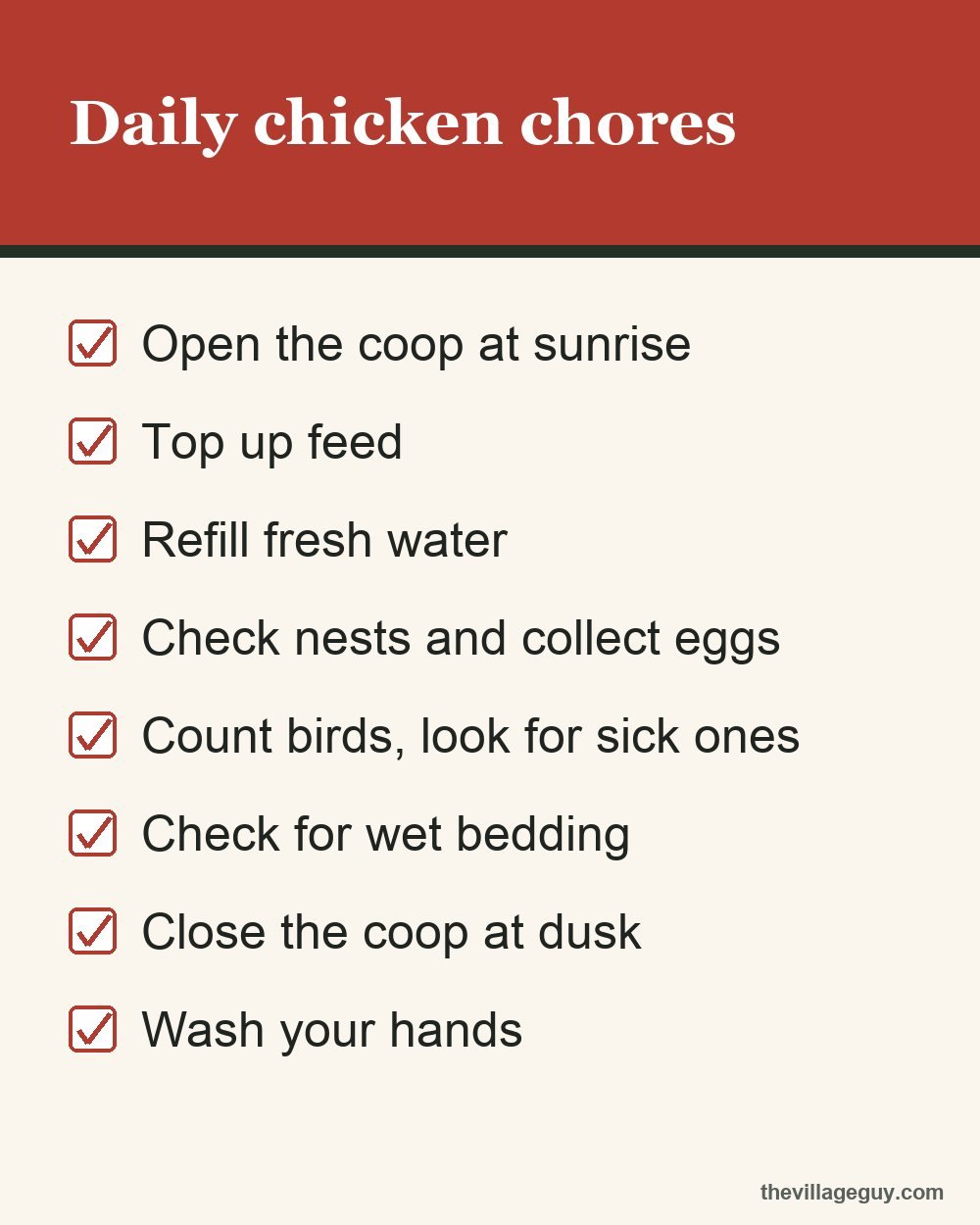
- Open the coop in the morning and close it at dusk
- Check feed and water levels and top them up
- Check nests and collect eggs, twice a day if you can, as UGA Extension suggests
- Count the birds and watch for any that are hunched, lame or not eating
- Wash your hands after handling birds, eggs or equipment
Every week
- Remove wet or caked bedding and add fresh shavings
- Scrub waterers and feeders
- Walk the fence and run for gaps, digging and torn wire
- Check nest boxes and refresh nesting material
Each season
Spring is for chicks and a full coop clean-out. Summer means shade and extra water. Fall brings the molt and a laying slowdown as days shorten. Winter is about liquid water and dry, ventilated housing. Spent bedding and manure are valuable in the garden once composted; our guide on how to start a vegetable garden explains the food-safety waiting periods for manure.
Handling the eggs
Clean nests mean clean eggs. When eggs do get dirty, how to wash fresh eggs explains dry cleaning first and the warm-water rule if you must wash. How long fresh eggs last covers storage times for washed and unwashed eggs, and how to tell if eggs are bad ranks the checks, from the carton date to cracking an egg into a separate bowl.
Health basics and biosecurity
Most flock problems are cheaper to prevent than to treat, and diagnosis and medication belong to a veterinarian, not a blog. What you can do is keep germs out, spot trouble early and know who to call.
Signs a bird is sick
USDA APHIS lists the warning signs to watch for: sudden deaths, lack of energy or appetite, a drop in eggs or soft and misshapen shells, swelling of the head or wattles, purple discoloration of the comb or legs, breathing trouble, nasal discharge, sneezing, stumbling and twisted necks. These can point to avian influenza or other diseases. Separate a sick bird, call a vet, your county extension office or your state veterinarian, and report unusual illness or deaths to USDA at 1-866-536-7593.
Protecting your family
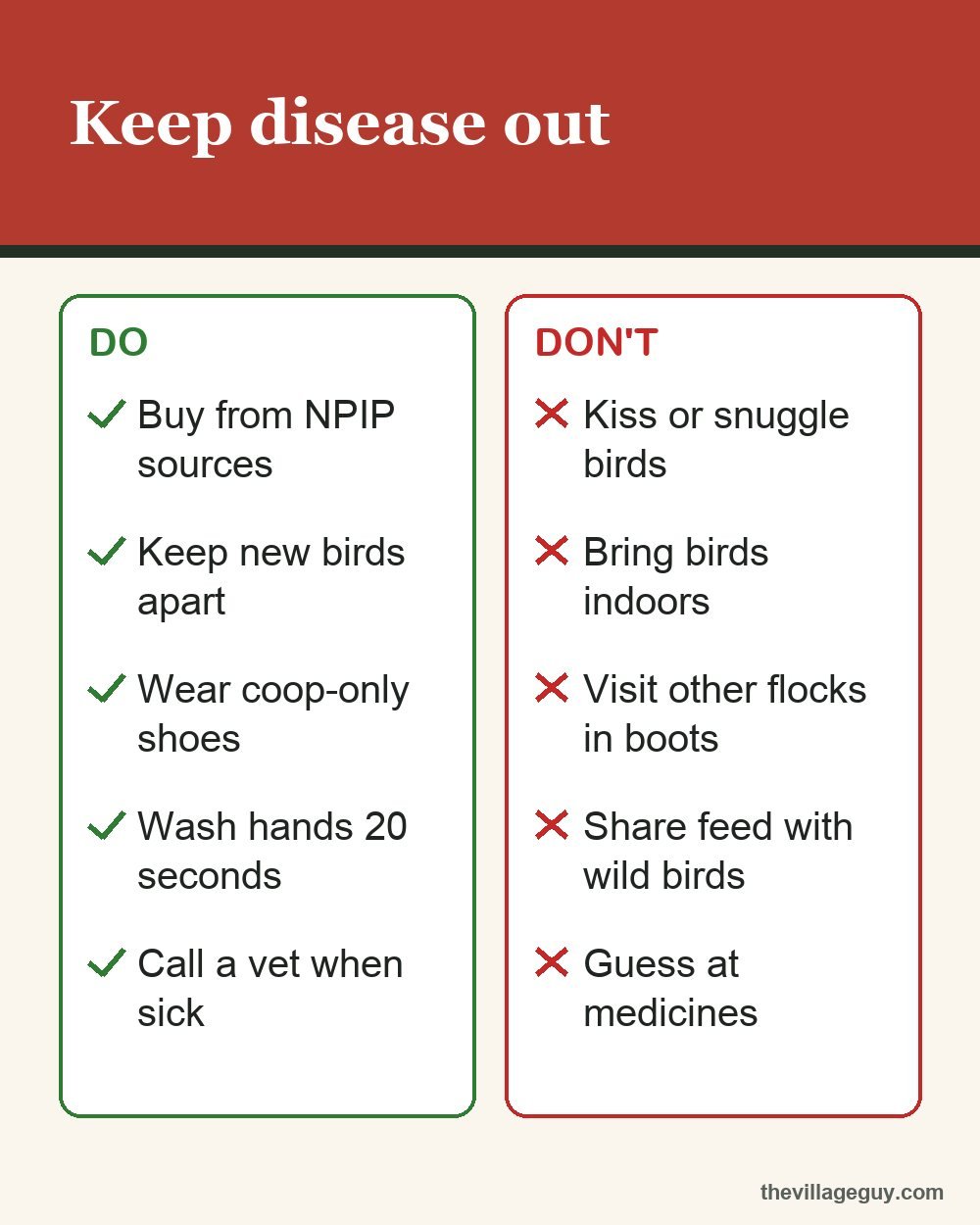
Healthy-looking hens can still shed Salmonella, according to the CDC, which advises washing hands with soap and water for 20 seconds after touching birds, supplies or eggs, not kissing or snuggling birds, keeping a dedicated pair of coop shoes that stay outside, and keeping children under 5 away from chicks and the areas where poultry live.
| Do | Avoid |
|---|---|
| Buy birds from NPIP-certified sources | Mixing new birds straight into the flock |
| Keep new or sick birds apart from the flock | Visiting other flocks in your coop boots |
| Wear dedicated coop shoes | Letting wild birds share feed and water |
| Call a vet for diagnosis and medicine | Guessing at drugs or doses from the internet |
What keeping chickens costs
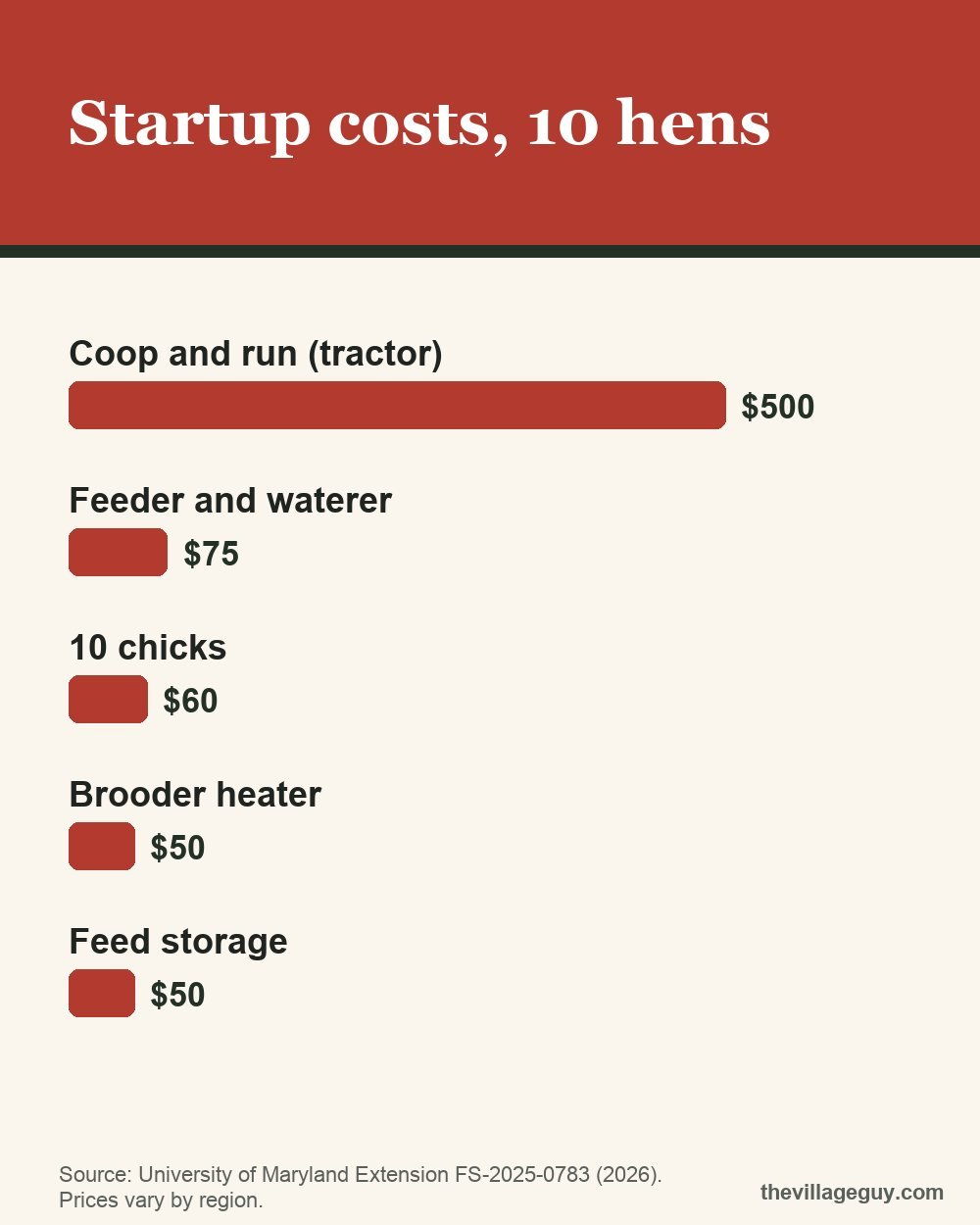
The most detailed recent budget comes from University of Maryland Extension (updated August 2026). It follows 10 hens raised from chicks for three years, and it is a useful template because it lists every assumption. Prices vary by region and season, so plug in your own.
| Item (UMD example, 10 hens, 3 years) | Cost used |
|---|---|
| Simple coop and run (chicken tractor) | $500 |
| Feeder and waterer | $75 |
| Brooder heater | $50 |
| Feed storage containers | $50 |
| 10 chicks at $6 each | $60 |
| Layer feed | $15 per 50 lb bag (47 bags) |
| Total over 3 years | $1,759, or $3.37 per dozen eggs (labor not counted) |
Other sources land in different places. Colorado State says upfront costs can run from hundreds to thousands of dollars, and that a 50-pound bag of layer feed at $15 to $20 feeds four to six chickens for about a month. A 2023 UF/IFAS Extension Lake County analysis, written when feed and egg prices were high, put feed alone at $6.11 per dozen and concluded that home eggs were unlikely to save much money. The honest summary: keep chickens for fresh eggs, pest control and the pleasure of it, and treat any savings as a bonus that grows the longer the coop lasts.
- Shopping list: coop and run, hardware cloth, waterer, feeder, chick starter, pine shavings, brooder heat source, thermometer, metal feed can
- Note to the feed store: please hold one 50 lb bag of layer feed and one bag of pine shavings for pickup Saturday
Backyard chickens FAQ
Do you need a rooster for hens to lay eggs?
No. Hens lay without a rooster; Utah State and UGA Extension both say so plainly. You only need one for fertile eggs to hatch chicks, and roosters are often banned in town limits because of crowing.
How much time does keeping chickens take?
Colorado State puts most daily chores under 15 minutes, not counting cleanouts, and the University of Maryland budget assumes about 20 minutes a day. The catch is that it is every day, so line up a neighbor for vacations.
Is keeping chickens cheaper than buying eggs?
Sometimes, over several years. The University of Maryland example worked out to $3.37 a dozen over three years without counting labor, while a UF/IFAS county analysis in a high-price year found little or no savings. Startup costs are the big variable.
What is the easiest chicken breed for beginners?
It depends on what you want most. Production layers lay the most eggs (Colorado State says White Leghorns can lay 280 to 300 a year), while heavier dual-purpose breeds lay fewer but suit mixed eggs-and-meat goals; NDSU notes they can take six to nine months to start laying. University of Maryland and UMaine Extension both publish breed guides that match breeds to climate and purpose.
Sources
- Colorado State University SOURCE: Want to raise backyard chickens for eggs? 5 things to know first (2025) (local rules, permits, straight-run odds, HOAs, costs, feed per bag, chore time, space, Leghorn eggs)
- Cornell Small Farms Program: Chickens and Other Poultry (municipal bans, rooster bans, limits, permits)
- NC State Extension: Keeping Garden Chickens in North Carolina (call zoning or animal control before ordering)
- PetMD: Backyard Chickens, A Pet Parent’s Guide (social birds, never alone, three to six hens)
- NDSU Extension: Beginner’s Guide to Raising Chickens (NPIP sources, vaccination, brooding at 95°F, brooder space, pullets, eggs per week)
- Utah State University Extension: Basics for Raising Backyard Chickens (floor, perch, nest box and feeder space, water founts, eggs per day, layer feed timing)
- University of Georgia Extension: Management Guide for the Backyard Flock (C969) (3 to 3.5 sq ft per hen, nest boxes, brooding at 90°F, collect eggs twice daily)
- UF/IFAS Extension: Raising Backyard Chickens for Eggs (AN239) (3 sq ft coop and 8 to 10 sq ft run per bird, buried wire)
- UConn Extension: Basic Management of Small Poultry Flocks (6 to 10 inches of roost per bird)
- Utah State University Extension: Is There a Correlation Between Rodents and Backyard Chickens? (hardware cloth over chicken wire, enclosed runs)
- University of Kentucky Extension: ID-245 (predators through chicken wire, buried barriers)
- University of Wisconsin Extension: Life Cycle of a Laying Hen (6 to 8 year lifespan, 3 to 4 laying years, add pullets every 2 to 3 years)
- Clark County, Washington: Safety tips to prevent a chicken coop fire (heat lamp and heater fire precautions, citing NFPA)
- USDA APHIS Defend the Flock: How to Spot Sickness (warning signs, reporting, 1-866-536-7593)
- CDC: Backyard Poultry (Salmonella, handwashing, coop shoes, children under 5)
- University of Maryland Extension: Backyard Layer Flock Economics (FS-2025-0783, updated August 2026) (10-hen budget, $3.37 per dozen, 20 minutes a day)
- UF/IFAS Extension Lake County: Egg-onomics of Keeping Backyard Chickens (2023) (feed-only $6.11 per dozen in a high-price year)